Tinnitus — that persistent ringing or buzzing in your ears — can sometimes be harmless, but not always. If it lingers for weeks or changes in intensity, it could be your body signaling something deeper. Understanding when tinnitus needs professional attention can protect your hearing and overall well-being. Here’s what you should look out for and why it matters.
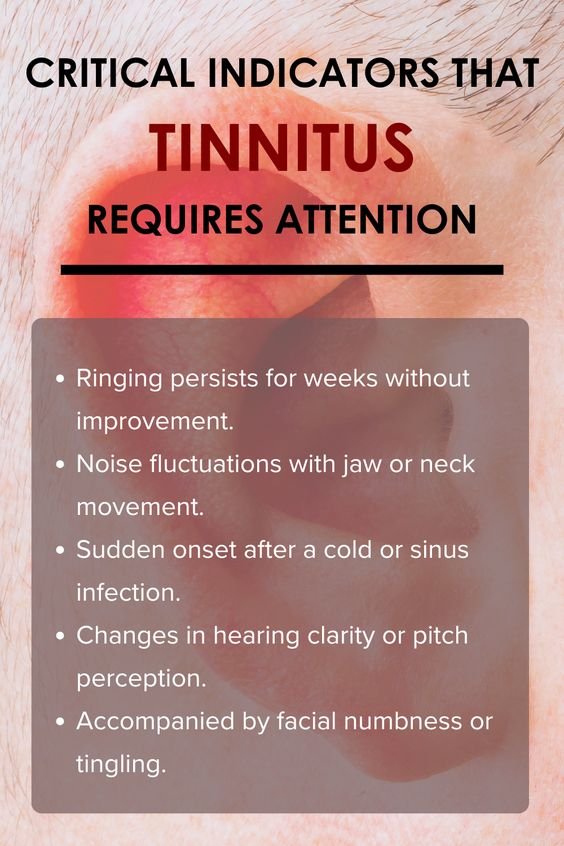
1. When Ringing Persists for Weeks Without Relief
If the ringing in your ears doesn’t fade after a couple of weeks, it’s not just “background noise.” Persistent tinnitus can stem from underlying hearing loss, ear infections, or even circulatory issues. It’s best to get a hearing test early—sometimes a simple earwax removal or medication change can make a world of difference.
2. Noticeable Changes With Jaw or Neck Movement
Ever noticed the ringing shifts when you open your jaw or turn your head? That could signal somatic tinnitus, where muscle tension or jaw alignment affects ear nerves. Physical therapy or dental evaluation might help relieve pressure and balance sound perception.
3. Sudden Onset After a Cold or Sinus Infection
If tinnitus appears right after a cold, flu, or sinus infection, inflammation might be affecting your middle ear or Eustachian tubes. Try gentle steam inhalation and hydration first—but if it doesn’t improve, consult an ENT. Early care can prevent permanent damage.
4. Hearing Feels Muffled or Pitch Sounds Different
When tinnitus comes with hearing changes—like struggling to hear soft voices or music sounding distorted—it could indicate sensorineural hearing loss. In such cases, an audiologist can perform hearing tests to pinpoint the cause and recommend treatment like sound therapy or hearing aids.
5. Tingling or Numbness Around the Face
Facial numbness or tingling alongside tinnitus might be more than an ear issue—it could involve nerve compression or vascular problems. Seek medical evaluation immediately if these symptoms appear together; early diagnosis can prevent complications.
6. Other Warning Signs You Shouldn’t Ignore
-
Tinnitus in only one ear
-
Dizziness or balance problems
-
Pulsing sounds matching your heartbeat (possible vascular tinnitus)
-
Sudden hearing loss in one or both ears
These red flags deserve quick medical attention from an ENT or audiologist.
What You Can Do Right Now
While waiting for your appointment:
-
Reduce exposure to loud noises (use ear protection).
-
Limit caffeine and alcohol, which can worsen ringing.
-
Practice stress management with breathing or mindfulness exercises.
Consistency in these habits can calm your auditory system and prevent flare-ups.
Final Thoughts
Tinnitus isn’t always just a harmless buzz—it’s your body’s way of communicating. If you experience persistent or unusual symptoms like hearing loss or numbness, don’t ignore them. Consult a hearing specialist early to protect your hearing health.
👉 Pin this post for later — because understanding your tinnitus today could save your hearing tomorrow.