Tinnitus can feel like a small annoyance at first — a faint ringing that comes and goes. But for many people, it slowly becomes a daily companion that influences how they sleep, focus, communicate, and handle stress. Because tinnitus isn’t visible, the challenges it creates often remain misunderstood or overlooked. The reality is that it affects far more than the ears. It can shape a person’s emotional health, productivity, and overall quality of life.
Understanding the different stages of tinnitus can help you identify where you currently stand and what kind of support or lifestyle adjustments may bring relief. Let’s walk through the impact of tinnitus on daily life, stage by stage.
MILD: Slight Ringing, Often Ignored
At this stage, tinnitus is usually soft, occasional, and easy to push into the background. Many people describe it as a light buzzing, a faint tone, or a background hum. It typically appears:
-
After exposure to loud sound
-
During quiet moments
-
When stressed or tired
-
After caffeine or lack of sleep
Daily impact:
Minimal — but not insignificant. Even mild tinnitus can cause people to become more aware of their hearing or more sensitive to silence.
Helpful habits:
-
Stay hydrated
-
Limit loud noise exposure
-
Keep stress levels low
-
Maintain regular sleep times
Early care helps prevent mild tinnitus from progressing.
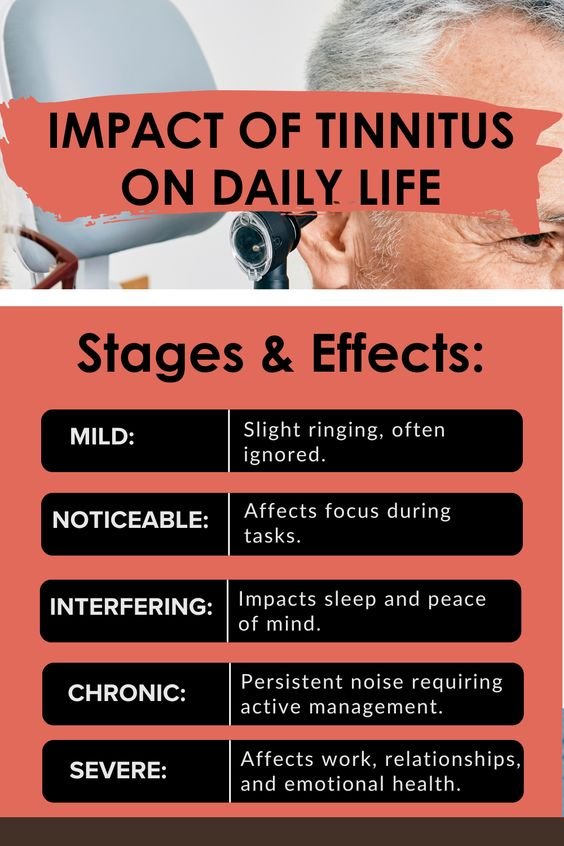
NOTICEABLE: Affects Focus During Tasks
At this stage, the ringing becomes more obvious, especially in quiet rooms or during activities that require concentration. It may interrupt reading, studying, or working.
You may notice:
-
Difficulty focusing on conversations
-
Needing background noise to concentrate
-
Becoming easily distracted
-
Feeling mentally “foggy” on tinnitus-heavy days
Daily impact:
Work productivity may drop. Tasks that were once easy may feel harder, and frustration can build when silence amplifies the ringing.
Supportive tips:
-
Low-volume fans or white noise
-
Breaks during long work sessions
-
Mindfulness techniques
-
Managing caffeine intake
INTERFERING: Impacts Sleep and Peace of Mind
Sleep is often the first major area affected when tinnitus gets louder or more persistent. Nights become challenging because silence intensifies the sound.
Common sleep struggles:
-
Trouble falling asleep
-
Frequent waking
-
Over-focusing on the ringing
-
Anxiety around bedtime
Daily impact:
Fatigue builds, making tinnitus feel even louder the next day. Mood swings, irritability, and reduced stress tolerance often follow.
Helpful adjustments:
-
Soft sleep sounds or nature audio
-
Consistent bedtime routine
-
Warm shower before bed
-
Limiting screen time at night
Improving sleep often reduces tinnitus intensity significantly.
CHRONIC: Persistent Noise Requiring Active Management
At this stage, tinnitus is consistent enough that it becomes part of everyday life. While it may not always feel severe, it does require intentional management to avoid overwhelm.
Typical signs:
-
Ringing present most of the day
-
Needing sound enrichment often
-
Stress or anxiety increasing symptoms
-
Difficulty finding “quiet relief”
Daily impact:
People begin planning their routines around coping strategies — sound machines, structured sleep, hydration, or avoiding certain triggers.
Management techniques:
-
Relaxation exercises
-
Neck and jaw stretching
-
Reducing inflammation through diet
-
Hearing check-ups
-
Cognitive techniques for sound acceptance
Chronic tinnitus doesn’t mean hopeless — it simply means you’ve reached a stage where active care helps the most.
SEVERE: Affects Work, Relationships & Emotional Health
Severe tinnitus is intense, intrusive, and emotionally draining. It impacts how you interact, communicate, and stay present.
Possible challenges:
-
Difficulty following conversations
-
Social withdrawal
-
Trouble working or multitasking
-
Heightened anxiety or irritability
-
Feeling overwhelmed or mentally exhausted
Daily impact:
Life can feel limited, especially when the sound becomes hard to tune out. Loved ones may not always understand, which adds emotional weight.
Support options that help at this stage:
-
Professional tinnitus therapy
-
Hearing support devices
-
Stress-reduction programs
-
Regular sound therapy
-
Medical evaluation for underlying issues
This stage requires compassion, support, and proper guidance — no one should navigate severe tinnitus alone.
Final Thoughts
The impact of tinnitus on daily life looks different for everyone, but each stage brings its own challenges. Whether you’re dealing with mild background ringing or more severe, intrusive noise, understanding your stage helps you choose the right strategies to regain comfort and control. Small habits like managing stress, improving sleep, staying hydrated, and using gentle sound therapy can make a meaningful difference. You’re not alone — and relief often begins with awareness.