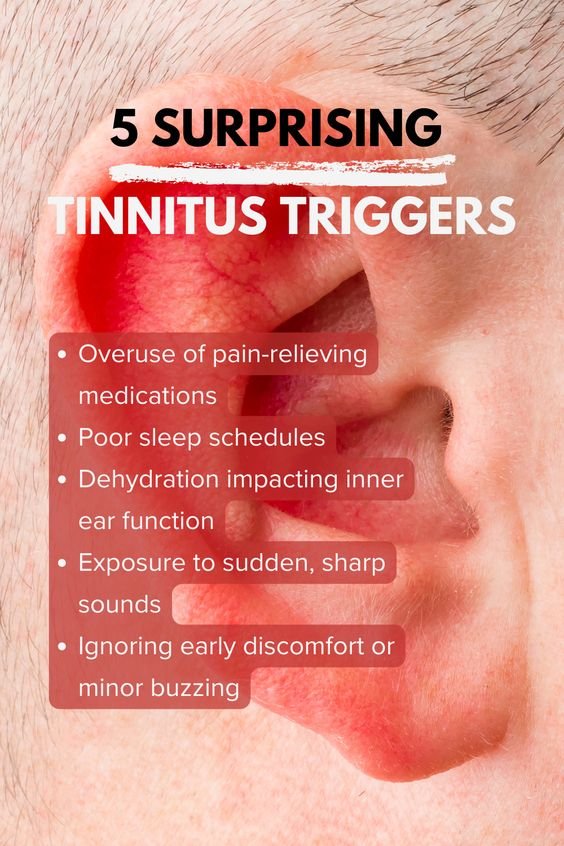
Tinnitus can feel overwhelming—especially when the ringing or buzzing becomes louder on stressful days, in quiet rooms, or after exposure to noise. The good news? Small, intentional habits can calm the intensity and help you feel more in control.
In this guide, we’ll expand on the practical steps you can use anytime the sound spikes. Let’s walk through gentle, immediate ways to reduce tinnitus sounds and support overall ear comfort.
⭐ 1. Wear Ear Protection in Noisy Settings
Noise exposure is one of the most common triggers for tinnitus spikes. Even everyday sounds—like traffic, busy restaurants, concerts, or power tools—can irritate the inner ear.
Here’s how you can protect your ears more effectively:
-
Keep soft silicone or foam earplugs in your bag or car.
-
Choose noise-reducing earmuffs if you work in loud environments.
-
Lower headphone volume to 50–60% maximum.
-
Use noise-canceling earbuds instead of turning the volume up.
You don’t need silence—just less sound pressure. Protecting your ears consistently helps reduce tinnitus flare-ups and supports long-term hearing health.
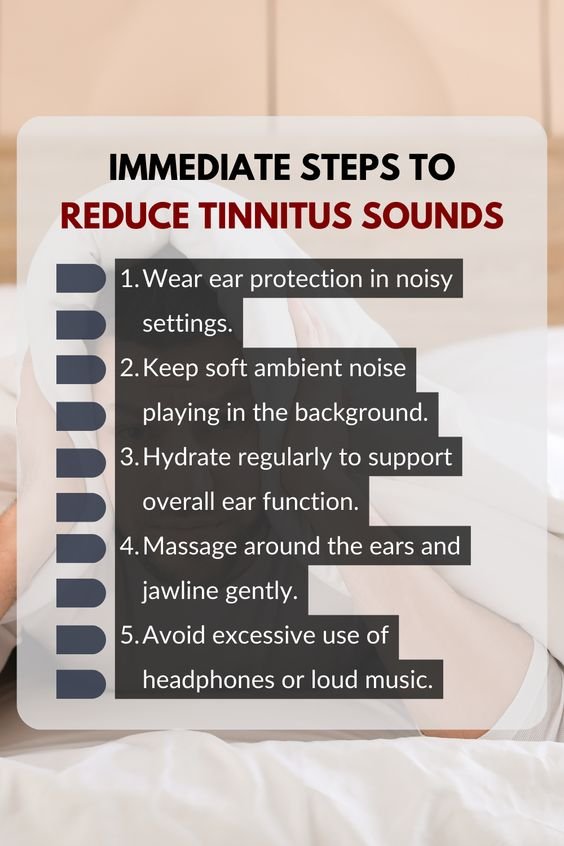
⭐ 2. Keep Soft Ambient Noise Playing in the Background
Silence often makes tinnitus feel louder. Adding gentle background sound helps the brain shift its focus away from the ringing and toward something more soothing.
Here are easy ambient noise ideas:
-
A fan or air purifier
-
Gentle rain sounds
-
Low-volume white or brown noise
-
Soft instrumental music
-
Nature sounds like flowing water or forest ambiance
If you want immediate relief at night, try placing a small speaker across the room. Avoid complete silence—your brain will latch onto the tinnitus instead of relaxing.
⭐ 3. Hydrate Regularly to Support Overall Ear Function
It doesn’t seem obvious, but hydration plays a surprisingly supportive role in tinnitus management. Dehydration can thicken inner-ear fluids, increase inflammation, and intensify ringing.
Practical hydration tips:
-
Drink water steadily throughout the day, not all at once.
-
Add electrolytes if you exercise or sweat often.
-
Limit dehydrating drinks such as caffeine and alcohol.
-
Eat water-rich foods like cucumbers, oranges, melons, and leafy greens.
Think of hydration as nourishment for your auditory system—your ears work better when your body is well-balanced.
⭐ 4. Massage Around the Ears and Jawline Gently
The jaw, neck, and ear muscles are closely connected. When they become tight—often from stress, teeth grinding, or poor posture—they can increase tinnitus intensity.
Try this 1–2 minute massage routine:
Jawline Release
-
Place your fingertips under your cheekbone.
-
Move in slow circular motions toward your jaw hinge.
Ear Area Massage
-
Massage gently behind the ear where the bone curves.
-
Trace downward along the neck to release tension.
Temple Relaxation
-
Apply soft pressure in circles for 20–30 seconds.
Even a short massage increases blood flow and reduces muscle tension that may amplify tinnitus. If you notice jaw clicking or grinding, consider discussing TMJ support with a professional.
⭐ 5. Avoid Excessive Use of Headphones or Loud Music
Long listening sessions—even at moderate volume—can irritate the auditory nerve and worsen tinnitus over time.
Here’s how to listen safely:
-
Follow the 60/60 rule: 60% volume for no more than 60 minutes at a time.
-
Use noise-canceling headphones to avoid turning the volume up.
-
Take “ear breaks” every hour to rest your auditory system.
-
Choose over-ear headphones instead of in-ear types for gentler sound delivery.
Small daily adjustments can significantly reduce cumulative ear stress.
🌿 Extra Ways to Reduce Tinnitus Sounds Naturally
These aren’t on the pin, but they pair beautifully with the steps shown:
✔ Try mindful breathing
Stress amplifies tinnitus signals. A few slow breaths help calm the nervous system.
✔ Reduce caffeine in the evening
Some people notice a direct connection between caffeine and tinnitus spikes.
✔ Support your sleep routine
Poor sleep increases sound sensitivity the next day.
✔ Keep your shoulders relaxed
Neck and shoulder tension can influence ear pressure and sound perception.
You don’t need to try all at once—start with one or two and build from there.
⭐ Final Thoughts: Start Calming Tinnitus One Small Step at a Time
Reducing tinnitus sounds doesn’t always require complicated solutions. Simple daily habits—protecting your ears, staying hydrated, using ambient noise, and relaxing the jaw—can make a noticeable difference in how you feel. Try one or two of these steps today and observe how your ears respond. And if this post helped, feel free to save it for later so you can return to these calming techniques anytime.