If you’ve ever noticed your tinnitus feels louder during stressful days, you’re not imagining it. Stress and tinnitus are deeply connected, and for many people, emotional tension can make ringing, buzzing, or humming sounds feel more intense and harder to ignore.
The good news? Understanding how stress affects tinnitus gives you real, practical ways to calm your body and ease symptoms. In this post, we’ll break down why stress can make tinnitus worse, how things like neck tension and poor blood flow play a role, and simple habits that can help you feel more in control again.
Let’s dive in.
Why Stress Can Make Tinnitus Worse
Stress triggers a chain reaction in your body. When you’re under pressure, your nervous system switches into “fight or flight” mode, releasing stress hormones like cortisol and adrenaline.
Here’s the issue:
These hormones don’t just affect your mood — they also heighten how your brain processes sound.
When stress levels stay high:
-
Your brain becomes more alert to internal noises
-
Your nervous system stays over-activated
-
Tinnitus signals feel louder and more intrusive
This is why many people report that tinnitus flares during anxiety, emotional exhaustion, or long periods of mental overload.
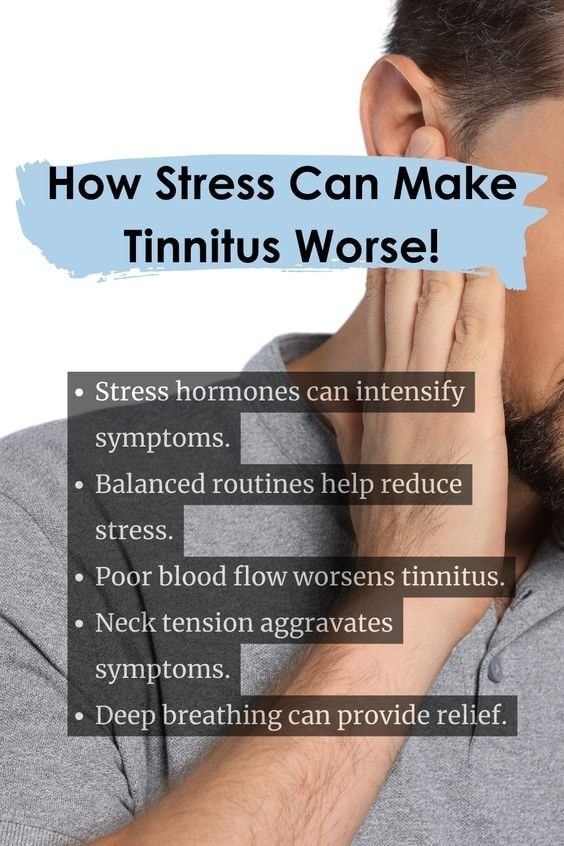
How Stress Hormones Intensify Tinnitus Symptoms
Stress hormones increase overall sensory sensitivity. That means your brain is more likely to “turn up the volume” on sounds — including the ones coming from inside your ears.
For tinnitus sufferers, this can lead to:
-
Louder ringing or buzzing
-
Increased awareness of tinnitus at night
-
Difficulty ignoring background noise
Think of it like this: stress puts your brain on high alert, and tinnitus becomes harder to tune out.
The Role of Blood Flow in Tinnitus and Stress
Poor blood flow is another hidden link between stress and tinnitus.
When you’re tense or anxious:
-
Blood vessels can constrict
-
Circulation to the neck, shoulders, and inner ear may decrease
-
Oxygen delivery becomes less efficient
Reduced blood flow can worsen tinnitus symptoms, especially for people who notice ringing changes with posture, movement, or pressure around the neck.
Supporting healthy circulation can make a noticeable difference.
Why Neck Tension Can Aggravate Tinnitus
Neck and jaw tension often go hand-in-hand with stress — and they’re closely connected to tinnitus.
Tight muscles in the:
-
Neck
-
Upper shoulders
-
Jaw and upper spine
…can irritate nearby nerves and alter sensory signals sent to the brain. For some people, simply turning the head or clenching the jaw can change the sound of tinnitus.
This is why managing muscle tension is just as important as calming the mind.
Simple Ways to Reduce Stress-Related Tinnitus
The goal isn’t to eliminate stress completely — that’s unrealistic. Instead, it’s about helping your nervous system reset regularly.
Here are a few gentle, effective strategies:
1. Deep Breathing for Nervous System Relief
Slow, deep breathing helps lower cortisol levels and signals safety to your brain.
Try this:
-
Inhale slowly through your nose for 4 seconds
-
Hold for 2 seconds
-
Exhale gently through your mouth for 6 seconds
-
Repeat for 3–5 minutes
Many people notice tinnitus feels less intense afterward.
2. Create Balanced Daily Routines
Unpredictable days increase mental strain. Simple routines — regular meals, sleep times, and short breaks — help stabilize your nervous system.
Even small structure can reduce stress-related tinnitus spikes.
3. Gentle Neck and Shoulder Relaxation
Light stretching, heat packs, or mindful posture checks can ease muscle tension that aggravates tinnitus.
Focus on:
-
Dropping your shoulders
-
Relaxing your jaw
-
Avoiding long periods of poor posture
4. Reduce Stress Before Bed
Tinnitus often feels louder at night because the world gets quiet — and stress accumulates.
Calming pre-sleep habits like:
-
Deep breathing
-
Gentle stretching
-
Low lighting and reduced screen time
…can make nighttime tinnitus easier to cope with.
What This Means for You
If your tinnitus worsens during stressful periods, that’s a valuable clue — not a failure. It means your body is asking for support, not silence.
By calming stress hormones, improving blood flow, and releasing neck tension, many people find tinnitus becomes less dominant and easier to manage.
Final Thoughts
Stress can make tinnitus worse, but stress management can also become one of your strongest tools for relief. Small, consistent habits — deep breathing, balanced routines, and muscle relaxation — often make a bigger difference than people expect.
You don’t have to fix everything at once. Start with one calming habit today and build from there.
📌 Save this post for later, and if you try one of these techniques, notice how your tinnitus responds. Which one feels easiest to start with?