If you’ve ever started a weight-loss journey feeling motivated—only to feel frustrated a few months later—you’re not alone. One of the most common questions people ask is why fat loss takes time, especially when effort feels high in the beginning.
The truth is simple but often overlooked: fat loss is a long-term biological process, not a short-term event. How you approach that process matters far more than how quickly you want results.
Let’s break down why fat loss takes time, what usually goes wrong, and how a strategic approach makes progress not only possible—but sustainable.
The “Impatient” Way vs the Strategic Way
Many people unknowingly start fat loss the impatient way. It feels exciting at first, but it rarely lasts.
Month 1: Motivation Is High
Early enthusiasm fuels strict rules, big promises, and high expectations. You may cut many foods, increase activity suddenly, and expect fast results.
This phase often works temporarily—mostly due to water weight changes and novelty.
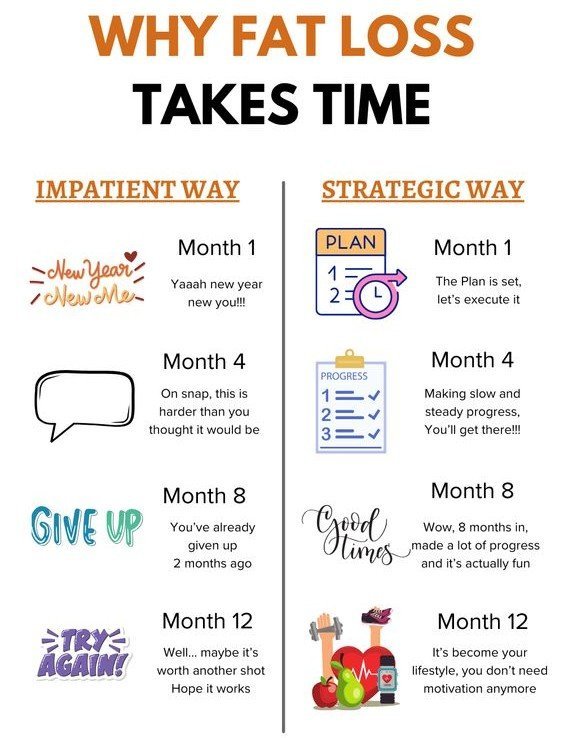
Month 4: Reality Sets In
Progress slows. Hunger increases. Life gets busy. Fat loss feels harder than expected.
This is where impatience often shows up:
-
“Why isn’t this working anymore?”
-
“I should be further along by now.”
Many people begin doubting the process instead of adjusting it.
Month 8: Burnout Happens
Without a sustainable plan, frustration builds. Motivation fades. Many people stop completely—sometimes months before they even realize it.
This cycle repeats itself year after year.
Why the Strategic Approach Works Better
Fat loss takes time because your body adapts. A strategic approach respects that instead of fighting it.
Month 1: A Clear Plan
Rather than extreme changes, the strategic approach focuses on:
-
A realistic plan
-
Small, repeatable habits
-
Clear expectations
The goal isn’t speed—it’s consistency.
Month 4: Steady Progress
Progress may be slower, but it’s real. Habits start to feel normal. Adjustments are made calmly instead of emotionally.
You begin to notice:
-
Better energy
-
Improved food awareness
-
Fewer cravings
These are signs fat loss is happening beneath the surface.
Month 8: Momentum Builds
By this point, progress feels easier—not because it’s effortless, but because it’s familiar.
Habits are no longer forced. They fit into real life. Fat loss continues quietly, without constant motivation.
Month 12: Lifestyle Takes Over
At this stage, fat loss isn’t the main focus anymore—maintenance is.
You no longer rely on motivation. Your habits support you automatically. That’s when results truly last.
Why Fat Loss Takes Time Biologically
Your body doesn’t rush change—it resists it.
Fat loss takes time because:
-
Hormones adapt slowly
-
Metabolism adjusts gradually
-
Muscle preservation matters
-
Stress affects progress
Rapid fat loss often leads to rebound because the body interprets it as a threat.
Slow progress allows your body to adapt without pushing back.
Common Mistake: Expecting Linear Results
Fat loss is rarely straight-line progress.
Instead, it looks like:
-
Plateaus
-
Small drops
-
Periods of maintenance
-
Then progress again
This is normal—not failure.
What to Focus on Instead of Speed
If fat loss takes time, what should you focus on?
-
Habit consistency
-
Protein intake
-
Daily movement
-
Sleep and recovery
-
Stress management
These don’t feel dramatic—but they create results that last.
Why “Slow” Fat Loss Is Actually Faster Long-Term
Here’s the irony: People who lose fat slowly often reach their goals sooner in the long run because they don’t keep restarting.
They don’t quit at month 4.
They don’t burn out at month 8.
They keep going.
Final Thoughts
Understanding why fat loss takes time can completely change how you approach your goals. When you stop fighting the timeline and start working with it, progress becomes calmer, steadier, and far more sustainable.
Fat loss isn’t about urgency—it’s about patience, planning, and consistency.
👉 Save this for later, and ask yourself:
Are you trying to rush the process—or build something that lasts?