Your knees work harder than you probably realize. Whether you’re walking up stairs, standing from a chair, or simply shifting your weight, your knees are constantly adapting, stabilizing, and absorbing force.
Understanding how your knees actually function can change the way you move, walk, and care for them long term. In this post, we’ll break down 5 fascinating knee facts—straight from the pin—and explain what they mean for your everyday life, joint comfort, and knee longevity.
Let’s take a closer look.
1. Knees Pivot and Rotate Slightly for Flexibility
Many people think the knee is just a simple hinge joint—but it’s more complex than that.
While the knee primarily bends and straightens, it also allows small amounts of rotation, especially when the knee is bent. This subtle movement helps your body:
-
Adjust to uneven ground
-
Turn smoothly while walking
-
Reduce stress on surrounding joints
Without this slight pivoting ability, everyday movements would feel stiff and unnatural. However, excessive twisting—especially under load—can strain ligaments, which is why controlled movement matters.
What this means for you: Be mindful of sudden twists, especially during sports or quick direction changes.
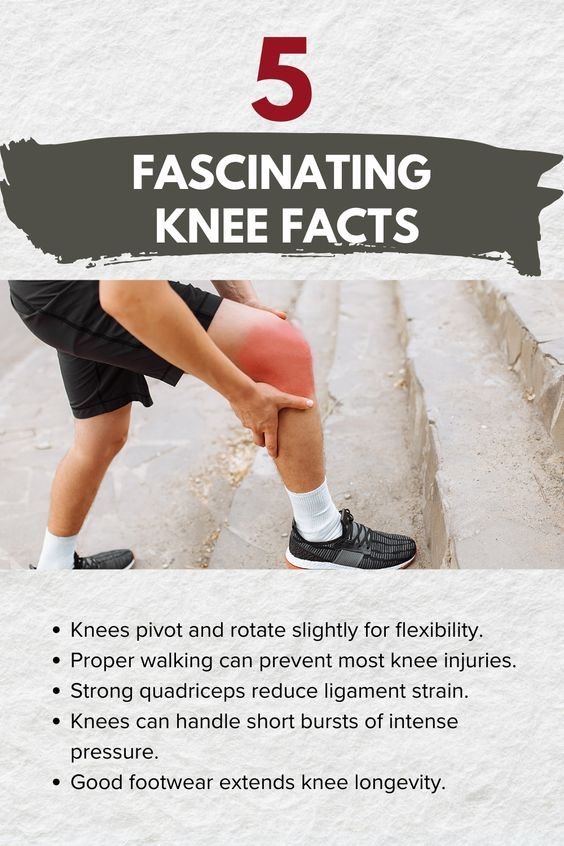
2. Proper Walking Can Prevent Most Knee Injuries
Walking is one of the most natural movements we do—but how you walk makes a big difference.
Poor walking mechanics can place extra stress on the knees over time, while proper alignment helps distribute force evenly. Simple habits like:
-
Keeping your steps smooth
-
Avoiding heavy heel pounding
-
Maintaining upright posture
…can significantly reduce wear on the knee joint.
Good walking doesn’t mean perfect walking—it means relaxed, balanced movement that doesn’t overload one side of the body.
What this means for you: Small posture adjustments during daily walks can protect your knees more than intense workouts.
3. Strong Quadriceps Reduce Ligament Strain
Your quadriceps (the large muscles on the front of your thighs) play a crucial role in knee stability.
When these muscles are strong:
-
They absorb shock before it reaches the knee joint
-
They reduce strain on ligaments like the ACL
-
They help control knee alignment during movement
Weak quadriceps force the knee ligaments to work harder than they should, increasing injury risk—especially during stairs, squats, or sudden stops.
What this means for you: Gentle strengthening exercises can help support your knees, even if you avoid high-impact activity.
4. Knees Can Handle Short Bursts of Intense Pressure
Your knees are surprisingly resilient. During activities like climbing stairs, standing up, or light jumping, they can handle several times your body weight—but only briefly.
The key word here is short bursts.
Problems arise when:
-
High pressure is repeated without recovery
-
Movement is unbalanced
-
Muscles aren’t supporting the joint properly
That’s when cartilage and connective tissue can start to feel overwhelmed.
What this means for you: Your knees are strong—but they need rest, balance, and support to stay that way.
5. Good Footwear Extends Knee Longevity
What’s on your feet directly affects what happens at your knees.
Shoes with poor support can:
-
Alter walking mechanics
-
Increase knee joint stress
-
Throw off alignment from the ground up
Supportive footwear helps absorb impact and encourages better movement patterns—especially if you’re on your feet often.
This doesn’t mean you need expensive shoes, just ones that:
-
Fit well
-
Offer stable support
-
Match your activity level
What this means for you: The right shoes can protect your knees long before pain ever starts.
Putting These Knee Facts Into Everyday Practice
Understanding these knee facts isn’t about fear—it’s about awareness.
When you:
-
Walk with intention
-
Strengthen supporting muscles
-
Avoid unnecessary twisting
-
Wear supportive footwear
…you give your knees the conditions they need to stay comfortable and functional for years.
Small daily habits matter more than occasional intense effort.
Final Thoughts
Your knees are incredibly capable, adaptable, and strong—but they rely on how you move and care for them. These 5 fascinating knee facts highlight just how interconnected movement, muscle support, and footwear really are.
You don’t need drastic changes. Start small, stay consistent, and listen to your body.
📌 Save this post for later, and let me know—which knee fact surprised you the most?