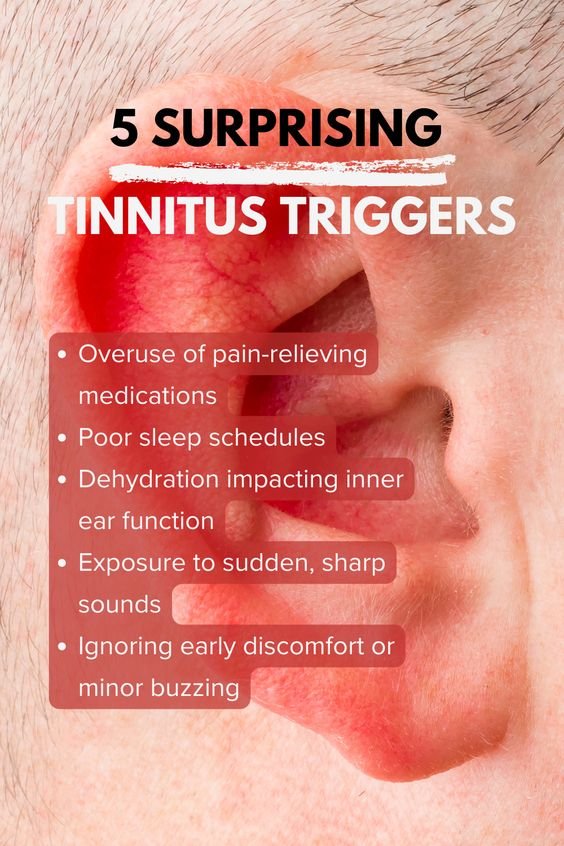
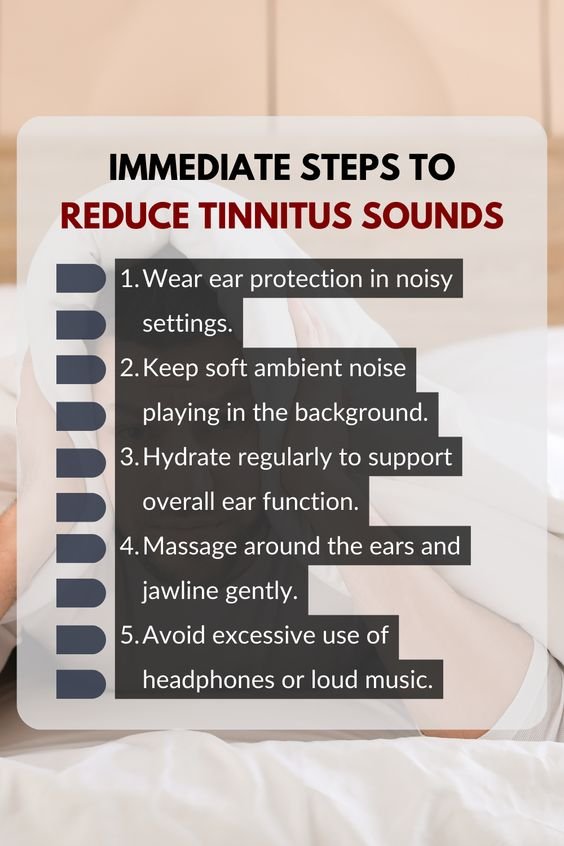
Living with tinnitus can feel overwhelming, especially on days when the ringing or buzzing seems louder than usual. But here’s the encouraging part: small, consistent lifestyle changes can make a real difference in how your ears feel day to day.
In this post, we’ll expand each one into practical steps you can start using right away. Let’s dive into what each fact really means for you—and how to apply it.
1. How a Healthy Diet Supports Better Ear Health
Your ears rely on tiny blood vessels and delicate nerves, and what you eat directly influences them. While there’s no single “tinnitus diet,” certain nutrients can help support overall ear function and reduce flare-ups.
Try adding more of these foods:
-
Leafy greens (spinach, kale): great for circulation
-
Berries: packed with antioxidants
-
Magnesium-rich foods (bananas, avocados): known to calm nerve signals
-
Omega-3s (salmon, walnuts): support inner-ear health

Ingredients to limit:
-
Excess salt, which can trigger ear fluid imbalance
-
Caffeine, if you notice it spikes your symptoms
-
Processed foods high in artificial additives
Think of your diet as a gentle daily reset button for your ears. Even small swaps—like choosing herbal tea instead of caffeinated coffee—can influence your baseline comfort over time.
2. Correct Posture Really Does Ease Ear Muscle Strain
Most people don’t realize this, but tight neck muscles, jaw tension, and shoulder stress can all contribute to tinnitus intensity. If you spend long hours on a computer or look down at your phone frequently, posture becomes even more important.
Quick posture resets you can do anytime:
- Roll your shoulders back and down.
- Lift your chest without arching your lower back.
- Gently tuck your chin to align your neck.
- Stretch your jaw by slowly opening and closing it.
These small habits reduce strain around the auditory system, especially the muscles connected to the jaw and neck. Over time, your ears feel calmer and less reactive.
3. Staying Calm Minimizes Symptom Intensity
Stress doesn’t cause tinnitus—but it can definitely amplify it. When the nervous system is tense, your brain becomes more reactive to sensory input, including the sounds you’re already hearing.
Stress-lowering techniques that help:
-
Slow breathing (inhale 4 seconds, exhale 6 seconds)
-
Light stretching or yoga
-
Warm showers before bed
-
Nature sounds, white noise, or soft ambient music
These simple calming rituals retrain your brain to shift attention away from the tinnitus signal. Think of it as giving your nervous system a soft place to land.
4. Why Early Treatment Makes a Meaningful Difference
One of the most encouraging facts is that early intervention leads to better outcomes. If tinnitus is new, changing rapidly, or accompanied by hearing changes, getting help sooner can prevent bigger issues later.
Consider seeking support if you notice:
-
Tinnitus that suddenly gets louder
-
Tinnitus in only one ear
-
Dizziness or vertigo
-
Muffled hearing
Even if your tinnitus is mild or long-term, seeing an audiologist can help you understand what’s happening inside your ears. They may recommend sound therapy, hearing support, or personalized lifestyle strategies that reduce the everyday impact.
5. Hydration Helps Maintain Ear Fluid Balance
Your inner ear relies on fluid to send sound signals properly. When your hydration drops—even slightly—your ears may feel off balance or extra sensitive.
Easy hydration habits:
-
Drink a full glass of water first thing in the morning.
-
Carry a water bottle during the day.
-
Add lemon, cucumber, or berries if plain water feels boring.
-
Limit dehydrating drinks like alcohol and high-caffeine beverages.
Hydration won’t “cure” tinnitus, but it keeps the ear’s natural processes working smoothly. Many people notice fewer intensity spikes when they stay consistently hydrated.
Final Thoughts
Tinnitus may be persistent, but your daily habits can shape how strongly it affects you. These five facts about reducing tinnitus impact—diet, posture, stress, early care, and hydration—are simple foundations that support calmer ears and a more comfortable daily routine.
Try choosing one tip to start with today, and build from there. Over time, these small habits can create meaningful, noticeable improvements in your overall ear comfort.
If this post helped, save it for later or share it with someone who might need a little support on their tinnitus journey.