Back pain often sneaks into your life quietly — not because of one big injury, but because of tiny everyday habits you barely notice. The way you sit, the shoes you wear, or how you carry your bag can slowly place pressure on your spine until it finally speaks up.
If you’ve been wondering why your back feels achy, stiff, or tired, these common habits may be the missing link. Let’s break them down so you can start making simple, pain-relieving changes today.
⭐ 1. Sitting in Slouched Positions More Than You Think
Most people slump without realizing it — especially when working from a couch, bed, or soft chair. Over time, this rounded posture stresses your lower back and weakens the muscles meant to support your spine.
Why it happens:
-
Long hours at a desk
-
Using laptops instead of desktops
-
Leaning into your phone
-
Relaxing on saggy sofas
Try this instead:
-
Keep screens at eye level
-
Sit with your hips slightly higher than your knees
-
Place a small cushion behind your lower back
-
Take a stand-and-stretch break every 30–40 minutes
A small posture correction can instantly reduce tension — your back will feel the difference almost immediately.
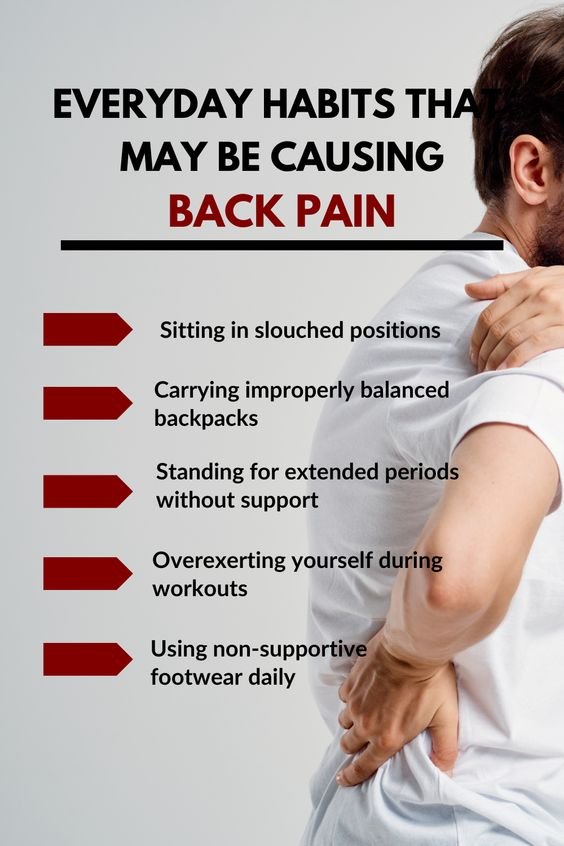
⭐ 2. Carrying Improperly Balanced Backpacks or Bags
Carrying a heavy bag on one shoulder seems harmless, but it forces your spine to tilt and compensate. Over time, this imbalance strains both your lower back and neck.
Pay attention to:
-
One-sided shoulder bags
-
Overstuffed purses
-
School backpacks worn on one strap
-
Bags carried too low or too high
Quick fix:
-
Switch to backpack-style bags
-
Wear both straps snugly
-
Lighten your daily load
-
Alternate shoulders if needed
Even small adjustments can help straighten your posture and reduce uneven pressure.
⭐ 3. Standing for Long Periods Without Proper Support
If your job requires standing — teaching, retail work, cooking, housekeeping — the constant downward pressure on your spine can lead to stiffness and chronic pain.
Watch out for:
-
Hard flooring
-
Standing in one place for too long
-
Leaning heavily on one leg
-
Locking your knees
Simple upgrades:
-
Use cushioned insoles or supportive shoes
-
Shift your weight regularly
-
Take seated breaks
-
Stand on anti-fatigue mats when possible
Your spine is designed to move — not to stay in one fixed position all day.
⭐ 4. Overexerting Yourself During Workouts
Working out is great, but pushing too hard or using improper form can easily trigger back pain. Many people unknowingly overload their spine during strength training or cardio.
Common workout mistakes:
-
Lifting too heavy
-
Rounding your back during deadlifts
-
Poor core engagement
-
Sudden, explosive movements
-
Skipping warm-ups and cool-downs
Better alternatives:
-
Focus on controlled form
-
Strengthen your core 2–3 times weekly
-
Warm up your hips and spine before lifting
-
Reduce volume when fatigue sets in
A strong back is built with consistency — not strain.
⭐ 5. Wearing Non-Supportive Shoes Daily
Your feet are your foundation, and when they lack support, the stress travels upward into your knees, hips, and lower back. Many people underestimate how much footwear affects spinal alignment.
Shoes that often cause problems:
-
Flat slip-ons
-
Worn-out sneakers
-
High heels
-
Thin sandals
Simple swaps:
-
Choose supportive, cushioned shoes
-
Replace sneakers every 6–9 months
-
Use orthopedic or arch-support inserts
-
Avoid standing long hours in flat shoes
Your back depends more on your footwear than you might think.
⭐ How Small Changes Lead to Big Relief
The good news? Most back pain caused by daily habits is reversible. By fixing posture, improving movement, choosing better shoes, and being mindful of your body, you give your spine the support it’s been craving.
Try changing just one habit this week — and see how much lighter your back feels.
⭐ Final Thoughts
Everyday habits that may be causing back pain often go unnoticed, but once you identify them, you can take small (but powerful) steps toward relief. Start with one or two simple adjustments and build from there. Your back thrives on good posture, balanced movement, and supportive routines. Save this post as a reminder — and give your body the comfort it deserves.