We often take our ears for granted—until something feels off. Maybe you notice ringing in your ears after a loud day, or you struggle to catch certain sounds during conversations. The truth is, ear health plays a huge role in your overall well-being, but it’s rarely talked about.
In this post, we’ll explore how hydration, nutrition, safe cleaning, and smart listening habits can help you maintain healthy hearing long-term.
Let’s break down each action and how it supports stronger, healthier ears.
1. Hydration Supports Your Inner Ear Functions
Staying hydrated does far more than refresh your body—it directly benefits the delicate systems inside your ears. The inner ear is filled with fluids that help control hearing and balance. When you’re dehydrated, those fluids can thicken or decrease, disrupting normal ear function.
Simple ways to stay hydrated throughout the day:
-
Start your morning with a full glass of water
-
Keep a refillable bottle next to you at home or work
-
Add lemon or cucumber if you prefer flavor
-
Eat water-rich foods like oranges, berries, and watermelon
Think of hydration as the foundation for healthy ears. Just like your muscles and brain rely on water, so does your auditory system.
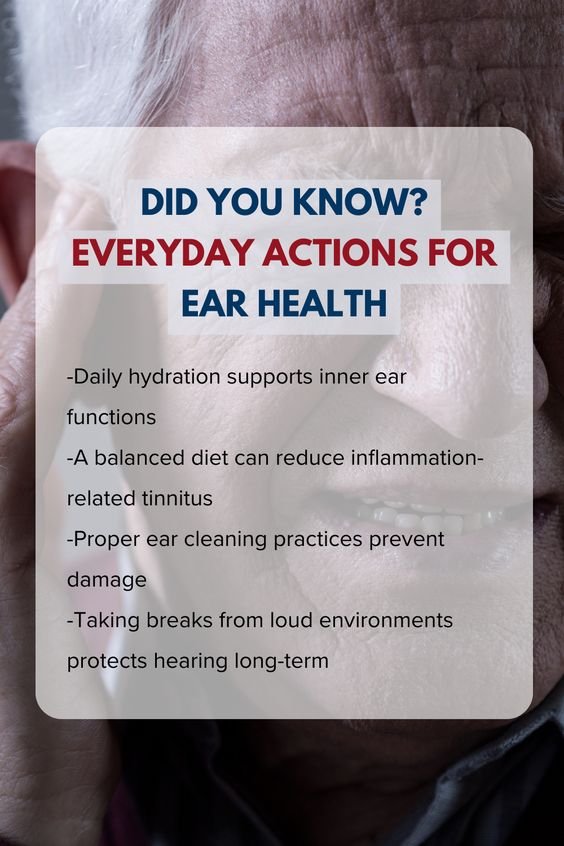
2. A Balanced Diet Reduces Inflammation and Supports Tinnitus Relief
Food is powerful—especially when it comes to inflammation. Many people experience inflammation-related tinnitus, where the ringing or buzzing becomes worse because of dietary triggers. A nutrient-rich, anti-inflammatory diet can help calm your body and reduce flare-ups.
Foods that support ear health:
-
Leafy greens like spinach and kale
-
Omega-3 rich fish such as salmon or sardines
-
Nuts, seeds, and healthy fats
-
Berries and colorful vegetables full of antioxidants
-
Ginger and turmeric for their anti-inflammatory benefits
These foods help support nerve function, improve circulation, and may reduce the intensity of tinnitus over time. Consider adding at least one anti-inflammatory meal to your daily routine for long-term ear wellness.
3. Practice Proper Ear Cleaning to Prevent Damage
Many people unknowingly damage their ears by cleaning them the wrong way. Cotton swabs may feel helpful, but they actually push wax deeper and can even harm the ear canal or eardrum. Proper ear hygiene keeps your ears clean without causing injury.
Safe ear cleaning practices:
-
Wipe the outer ear with a warm, damp cloth
-
Avoid inserting anything inside the ear canal
-
Use ear drops (saline-based) if wax buildup is noticeable
-
Visit a healthcare provider for safe wax removal
Earwax is actually protective—it traps dust, dirt, and bacteria. The goal isn’t to remove it entirely but to keep your ears healthy while avoiding unnecessary irritation.
4. Take Breaks From Loud Environments to Protect Hearing Long-Term
Noise exposure is one of the biggest contributors to long-term hearing loss. Whether it’s loud restaurants, concerts, traffic, or even your favorite earbuds, your ears need downtime. The Pinterest pin includes this reminder because giving your ears “quiet breaks” can significantly lower the risk of permanent damage.
Easy ways to protect your ears:
-
Use noise-canceling headphones to avoid turning the volume up
-
Step outside for a quick break during loud events
-
Follow the “60/60 rule”: 60% volume for no more than 60 minutes
-
Wear ear protection during noisy tasks like mowing the lawn
Just like your body needs rest after a workout, your ears need rest after absorbing loud sounds.
5. Support Your Ears With Everyday Lifestyle Habits
Beyond hydration, diet, and noise breaks, small lifestyle habits can make your ears stronger and healthier.
Helpful daily actions:
-
Maintain stable blood pressure for better ear circulation
-
Limit smoking and alcohol, which can worsen tinnitus
-
Manage stress, as anxiety can intensify ear ringing
-
Get enough sleep to support nerve repair and balance
Ear health is deeply connected to your overall wellness. The healthier your habits, the better your ears function.
Final Thoughts
Your ears work hard for you every day, and protecting them doesn’t require complicated routines—just simple, consistent habits. By staying hydrated, eating anti-inflammatory foods, practicing safe ear cleaning, and taking breaks from loud environments, you’re giving your ears the care they truly deserve. Start with one or two of these actions today, and over time, you’ll feel the difference in your comfort, clarity, and long-term hearing health. If you found this helpful, save this post for later and keep these gentle reminders close.