“Eat less to lose fat” is one of the most common pieces of advice—and also one of the most misunderstood. Many people assume it means eating tiny portions, feeling hungry all day, or constantly fighting cravings.
But that’s not what eating less truly means. The real key is understanding calories, food volume, and food quality. You can actually eat more food while still achieving fat loss—if you choose wisely. This article breaks down what “eat less” really means, why volume matters, and how to apply it without misery or extremes.
Eating Less Doesn’t Mean Eating Less Food
Here’s the big misunderstanding:
Eating less refers to fewer calories, not necessarily less food on your plate.
Some foods are very calorie-dense. Small portions contain a lot of energy. Others are high-volume but relatively low in calories, meaning you can eat more of them and still stay in a calorie deficit.
This difference is what makes or breaks long-term fat loss.
Calories vs Food Volume: A Simple Comparison
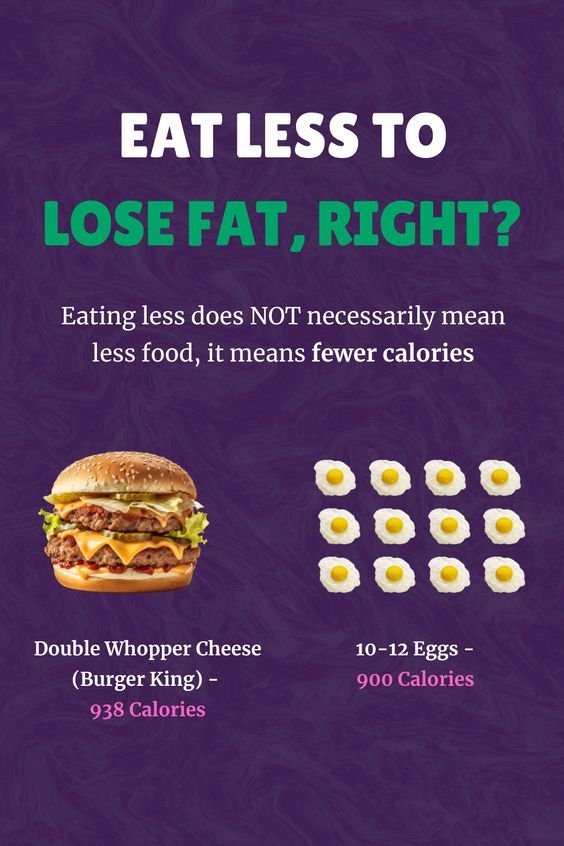
Look at how different foods compare calorie-wise:
-
A fast-food burger can contain close to 900–1,000 calories in one item
-
A large plate of whole foods (eggs, vegetables, lean protein) can provide similar calories but far more volume and satiety
The stomach doesn’t count calories—it responds to volume, fiber, and protein. When meals feel big and satisfying, staying consistent becomes much easier.
Why High-Calorie Foods Make Fat Loss Harder
Highly processed foods are designed to be easy to overeat.
They tend to be:
-
High in fats and refined carbs
-
Low in fiber
-
Low in satiety per calorie
This means you can consume hundreds of calories quickly without feeling full—and then feel hungry again soon after.
That’s why many people feel like they’re “eating less” but still not losing fat.
The Role of Calorie Density in Fat Loss
Calorie density describes how many calories a food contains per gram.
-
Low-calorie-density foods: vegetables, fruits, lean proteins
-
High-calorie-density foods: fast food, pastries, fried foods
Fat loss becomes easier when most of your meals come from low-calorie-density foods because you can:
-
Eat larger portions
-
Feel physically full
-
Reduce hunger and cravings
This is where “eating less” stops feeling like restriction.
Protein and Fiber Change Everything
Two nutrients make eating less calories much easier:
Protein
-
Increases fullness
-
Preserves muscle during fat loss
-
Reduces snacking urges
Examples: eggs, chicken, fish, Greek yogurt.
Fiber
-
Slows digestion
-
Supports blood sugar balance
-
Adds food volume
Examples: vegetables, fruits, legumes.
Meals built around protein and fiber naturally regulate appetite.
Why Comparing Foods Can Be Eye-Opening
When people compare “healthy food” to “junk food,” they often focus only on calories.
But consider this:
-
One highly processed item may meet your calorie limit
-
A plate of whole foods at the same calories gives more chewing, more volume, more fullness
This is why sustainable fat loss is about food quality, not suffering.
What “Eating Less” Should Look Like in Practice
A realistic fat-loss approach looks like this:
-
Larger portions of vegetables
-
Enough protein at every meal
-
Controlled portions of calorie-dense foods
-
Fewer ultra-processed items
You’re eating strategically, not starving.
If hunger is constant, something is off—usually protein, fiber, or food choices.
Common Mistakes People Make
Many people struggle because they:
-
Slash calories too aggressively
-
Skip meals
-
Rely on willpower instead of structure
-
Eat calorie-dense foods too often
Fat loss isn’t about discipline alone—it’s about setting up meals that work with appetite.
Can You Still Eat Your Favorite Foods?
Yes—but frequency and portion matter.
Enjoying calorie-dense foods occasionally is realistic. Building your daily meals around high-volume, lower-calorie foods is what creates consistency.
This balance is what prevents burnout.
A Health Reality Check
Fat loss always requires a calorie deficit—but how you create it matters. The goal is not to eat as little as possible, but to eat in a way that:
-
Supports your energy
-
Keeps hunger manageable
-
Is sustainable long term
Extremes rarely last.
Final Thoughts
So, eat less to lose fat—yes, but not in the way most people think. It’s not about tiny plates or constant hunger. It’s about fewer calories through smarter food choices, higher volume, and better balance. When meals are satisfying and nutrient-dense, fat loss feels calmer, more predictable, and far more sustainable.
Save this perspective and apply it to your next meal. Ask yourself: Can I eat more volume here while keeping calories reasonable? That question alone can change everything.