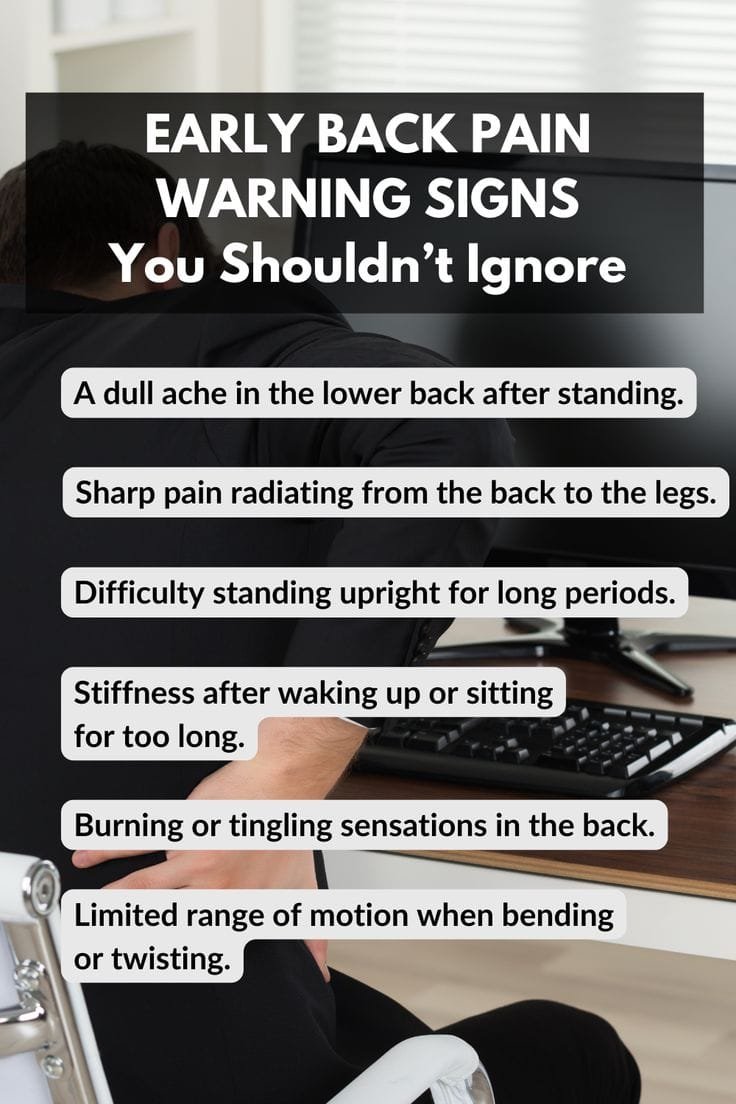
Back pain can creep in quietly — starting as a mild discomfort and growing into something that affects your daily life. The earlier you recognize the signs, the easier it is to manage and prevent chronic problems.
In this post, we’ll walk through the subtle but important early signs of back pain and share how to take action before it worsens.
1. Persistent Tightness in the Back Muscles
If your back often feels tight — even without lifting or overexertion — it could be an early indicator of muscle imbalance or strain. Regular stretching, light yoga, and posture checks can help loosen tension before it becomes painful.
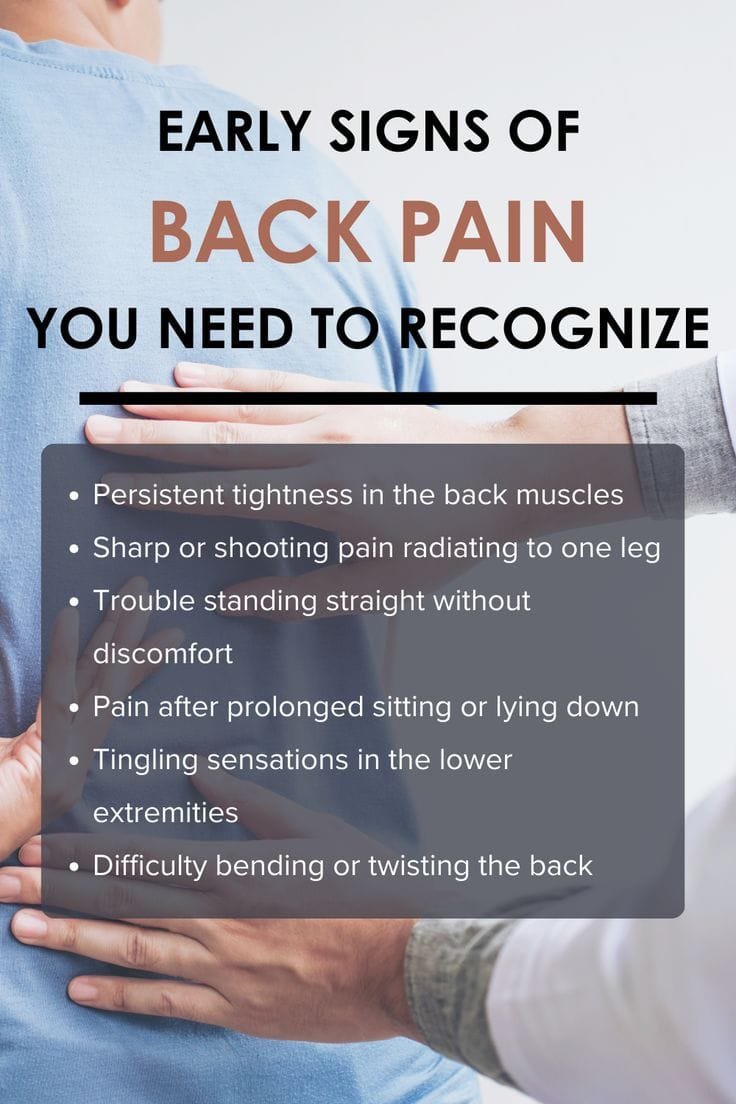
2. Sharp or Shooting Pain Radiating to One Leg
Pain that travels down one leg often signals sciatica — irritation of the sciatic nerve. This pain might feel sharp, tingling, or burning.
Try gentle hamstring stretches, avoid prolonged sitting, and maintain a neutral spine when working or driving.
3. Trouble Standing Straight Without Discomfort
If standing tall feels awkward or painful, your spine or core muscles might be out of alignment.
Focus on strengthening your core muscles, practicing mindful posture, and avoiding slouching when sitting or walking.
4. Pain After Prolonged Sitting or Lying Down
Spending too much time in one position — like sitting at a desk or lying on a soft couch — can compress your spine and stiffen muscles.
Take short standing breaks every 30 minutes, use ergonomic chairs, and stretch your lower back throughout the day.
5. Tingling or Numbness in the Lower Extremities
A tingling sensation or numbness in your legs could mean that nerves are being compressed.
Try light walking, gentle back extensions, or consult a physical therapist to ensure no underlying spinal issue is involved.
6. Difficulty Bending or Twisting the Back
Limited mobility or pain when bending forward or rotating your torso can be an early sign of lumbar strain or disc problems.
Warm up before activity, maintain flexibility through stretching, and strengthen your lower back muscles to improve support.
🧠 Bonus Tip: Watch Your Posture Daily
Poor posture is one of the most common triggers of chronic back pain. Be mindful of your sitting habits, screen height, and sleeping positions — these small details can make or break your spine health.
🌿 Final Thoughts
Recognizing the early signs of back pain gives you a head start in prevention. Don’t ignore tightness, tingling, or posture issues — your body is sending signals for a reason.
Start small: stretch daily, move more, and stay mindful of how you sit and stand. Your back will thank you later 💪