Back pain often starts quietly — a dull ache here, a little stiffness there — and before you know it, it’s interfering with your daily life. The truth is, your body gives you signals long before serious pain sets in. Recognizing these early back pain warning signs can help you take control early, avoid chronic issues, and protect your spine health for the long run.
Let’s explore the most common red flags, what they mean, and when it’s time to take action.
1. A Dull Ache in the Lower Back After Standing
That mild ache you feel after standing for a while might seem harmless, but it’s one of the first indicators of lower back strain. This usually happens when the muscles around your spine are fatigued or not supporting your posture properly.
🟢 Tip: Stretch your hamstrings and hip flexors daily. Weak or tight muscles in these areas often contribute to lower back pain.
2. Sharp Pain Radiating from the Back to the Legs
A shooting pain that travels from your lower back down to your legs may indicate sciatica — a condition caused by irritation of the sciatic nerve. It’s often linked to a herniated disc, spinal misalignment, or prolonged sitting.
🟢 Tip: Avoid sitting for long hours and try gentle yoga poses like child’s pose or knee-to-chest stretch to relieve pressure on the nerve.
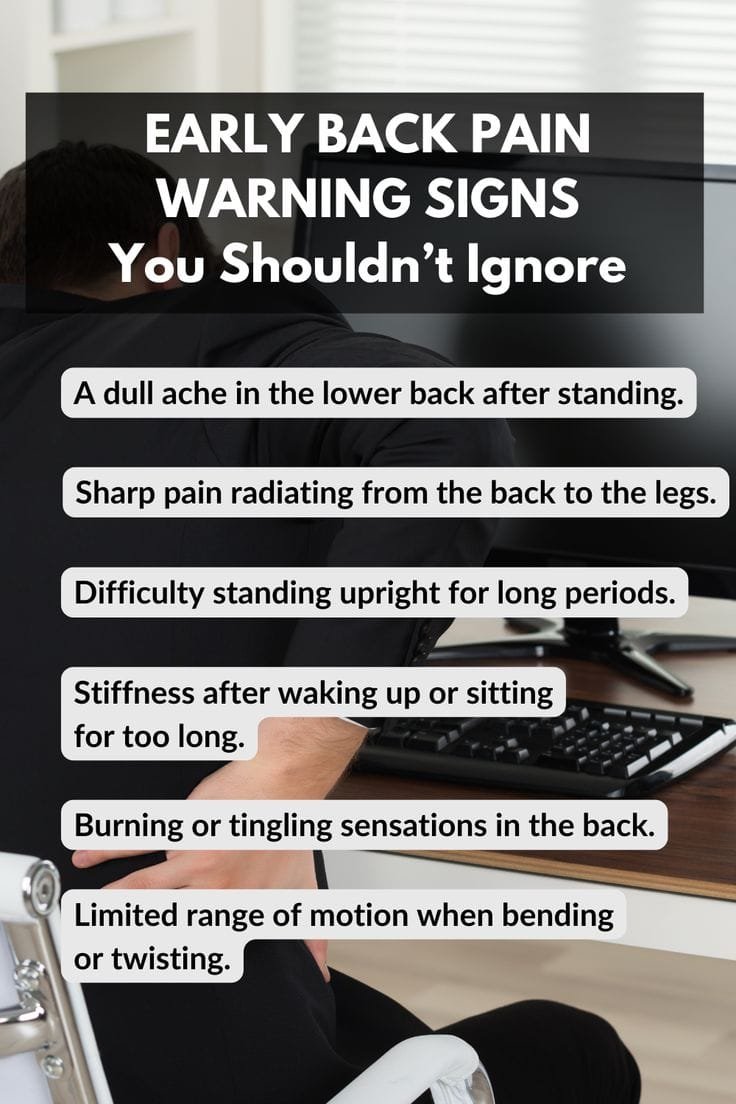
3. Difficulty Standing Upright for Long Periods
If standing upright feels uncomfortable or painful, it could be an early sign of spinal instability or disc problems. Your spine might be compensating for weak core muscles or misalignment.
🟢 Tip: Strengthen your core with exercises like planks and bird-dogs. A strong core supports your back and helps maintain proper posture.
4. Stiffness After Waking Up or Sitting for Too Long
Morning stiffness or pain after long periods of sitting isn’t just aging — it’s your spine’s way of saying it’s under stress. This stiffness can result from dehydration of spinal discs or inflammation in your joints.
🟢 Tip: Start your day with a 5-minute stretch routine focusing on your back and hips. Drinking enough water also keeps your discs hydrated and flexible.
5. Burning or Tingling Sensations in the Back
A burning, tingling, or “pins and needles” feeling in your back can point to nerve compression or inflammation. This is more serious than muscle soreness and may indicate nerve irritation from poor posture, injury, or a herniated disc.
🟢 Tip: Adjust your workstation ergonomics. Ensure your chair supports your lower back and your screen is at eye level to reduce strain.
6. Limited Range of Motion When Bending or Twisting
If bending forward or turning your body feels restricted, it’s a sign your muscles or spinal joints are tightening up — often due to early arthritis, tension, or improper posture.
🟢 Tip: Gentle mobility exercises like pelvic tilts and side bends can improve flexibility and reduce stiffness. Avoid sudden or jerky movements.
When to See a Professional
While mild back discomfort can be managed with rest and stretching, certain signs should never be ignored. Consult a doctor or physical therapist if you experience:
-
Persistent pain lasting more than two weeks
-
Numbness or tingling in your legs or feet
-
Pain after a fall or injury
-
Unexplained weight loss with back pain
Early intervention is key — catching issues early can prevent long-term damage and even surgery.
Simple Habits to Protect Your Back Every Day
Healthy spine habits can go a long way in preventing back pain from returning:
-
Maintain good posture: Keep your shoulders relaxed and core engaged when sitting or standing.
-
Move frequently: Avoid staying in one position for too long — even short walks help.
-
Lift properly: Bend at your knees, not your waist.
-
Sleep smart: Use a medium-firm mattress and sleep on your side with a pillow between your knees.
-
Stay active: Regular low-impact activities like swimming, walking, or yoga keep your spine strong and mobile.
Final Thoughts
Back pain doesn’t happen overnight — it builds up silently through habits, posture, and stress. Listening to your body’s early warning signs is the first step toward healing and prevention.
If you notice any of these symptoms, don’t push through the pain. Instead, take small daily actions to support your spine, strengthen your core, and move mindfully. Your future self will thank you!
💡 Save this post to remind yourself of these back pain warning signs — your back deserves the attention.