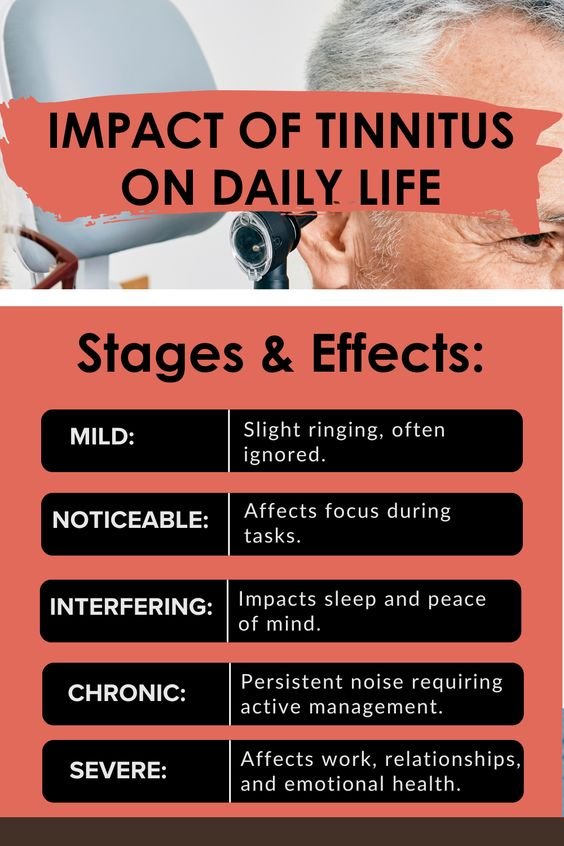
Tinnitus doesn’t feel the same for everyone. For some, it’s a faint background noise that only shows up in quiet moments. For others, it can be a constant presence that affects concentration, sleep, and emotional well-being. Understanding the different stages of tinnitus can help you make sense of what you’re experiencing and decide when it’s time to seek extra support.
In this guide, we’ll walk through the five commonly recognized stages of tinnitus—explained in simple, real-life terms—so you can better understand where you may fall and what it means for daily life.
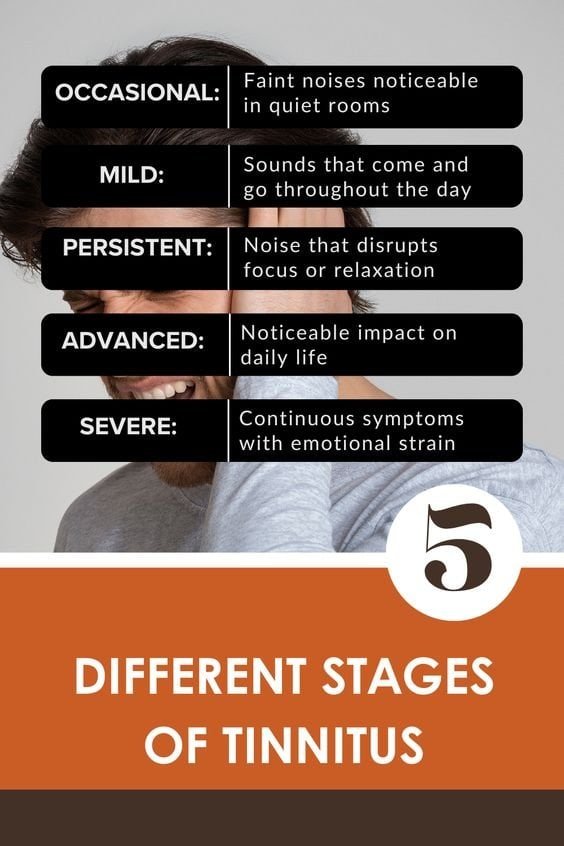
Stage 1: Occasional Tinnitus
Occasional tinnitus is usually the mildest stage. At this level, sounds are faint and often only noticeable in very quiet environments, such as late at night or early in the morning.
Common experiences include:
-
A soft ringing or buzzing when the room is silent
-
Sounds that disappear once background noise returns
-
Little to no impact on daily activities
Many people experience this stage at some point, especially after stress, fatigue, or temporary noise exposure. While it may not be disruptive, it’s often the first sign to pay attention to ear health and stress levels.
Stage 2: Mild Tinnitus
Mild tinnitus involves sounds that come and go throughout the day. The noise may be more noticeable than occasional tinnitus but doesn’t usually interfere heavily with daily responsibilities.
What this stage often feels like:
-
Ringing or humming that appears intermittently
-
Sounds that vary in intensity
-
Mild distraction during quiet tasks
At this stage, people may start becoming more aware of tinnitus patterns—such as noticing it more during stress, tiredness, or after long screen time. Simple lifestyle adjustments can sometimes help manage symptoms at this level.
Stage 3: Persistent Tinnitus
Persistent tinnitus is when the sound becomes harder to ignore. It may start interfering with focus, relaxation, or sleep, especially during quiet moments.
Common signs include:
-
Difficulty concentrating in silence
-
Trouble relaxing or falling asleep
-
Increased awareness of the sound during the day
This stage often marks a shift from “annoying” to “impactful.” While daily life is still manageable, tinnitus begins to demand more attention, which can increase frustration if not addressed thoughtfully.
Stage 4: Advanced Tinnitus
Advanced tinnitus has a noticeable effect on everyday life. The sound may be frequent or constant and can influence mood, productivity, and overall comfort.
People at this stage may experience:
-
Difficulty focusing on work or conversations
-
Disrupted sleep patterns
-
Avoidance of quiet environments
At this point, tinnitus is no longer just a background issue—it actively shapes daily routines. Many people begin seeking professional guidance or structured coping strategies during this stage.
Stage 5: Severe Tinnitus
Severe tinnitus is the most challenging stage. Symptoms are typically continuous and may come with emotional strain such as anxiety, irritability, or low mood.
This stage may include:
-
Constant, intrusive noise
-
Emotional exhaustion or stress related to symptoms
-
Significant impact on quality of life
Severe tinnitus doesn’t just affect hearing—it affects mental and emotional well-being too. Compassionate support, proper evaluation, and long-term management strategies become especially important here.
Why Understanding the Stages of Tinnitus Matters
Knowing the different stages of tinnitus helps put your experience into perspective. It reminds you that tinnitus exists on a spectrum—and that what you’re feeling is valid, regardless of the stage.
Understanding your stage can help you:
-
Recognize patterns and triggers
-
Decide when lifestyle changes may help
-
Know when it’s time to seek professional advice
It also reduces fear. When tinnitus feels unpredictable, having a framework can make it feel more manageable.
Can Tinnitus Move Between Stages?
Yes—tinnitus isn’t always fixed. Symptoms can fluctuate depending on factors like stress, sleep quality, noise exposure, posture, and overall health. Some people notice improvement with supportive habits, while others experience progression without proper care.
That’s why early awareness and gentle daily adjustments often matter more than people realize.
Final Thoughts: Awareness Is the First Step
The five different stages of tinnitus—from occasional to severe—highlight how varied this condition can be. Wherever you are on this spectrum, understanding your symptoms is a powerful first step toward managing them more calmly and effectively.
If tinnitus is starting to affect your focus, sleep, or emotional well-being, you’re not alone—and you don’t have to ignore it. Save this guide for reference and check in with yourself over time. Which stage feels closest to your current experience?