Tinnitus doesn’t always begin as constant ringing. For many people, it starts quietly—through small, strange sensations that are easy to dismiss. A sound that appears only during certain movements. A noise that pulses briefly and disappears. A feeling that something is “off,” but not severe enough to act on. These early signs matter.
Recognizing the daily warning signs of tinnitus can help you understand what your body is signaling and when it may be time to pay closer attention. Below are some common early indicators people notice in day-to-day life—and what they may mean.
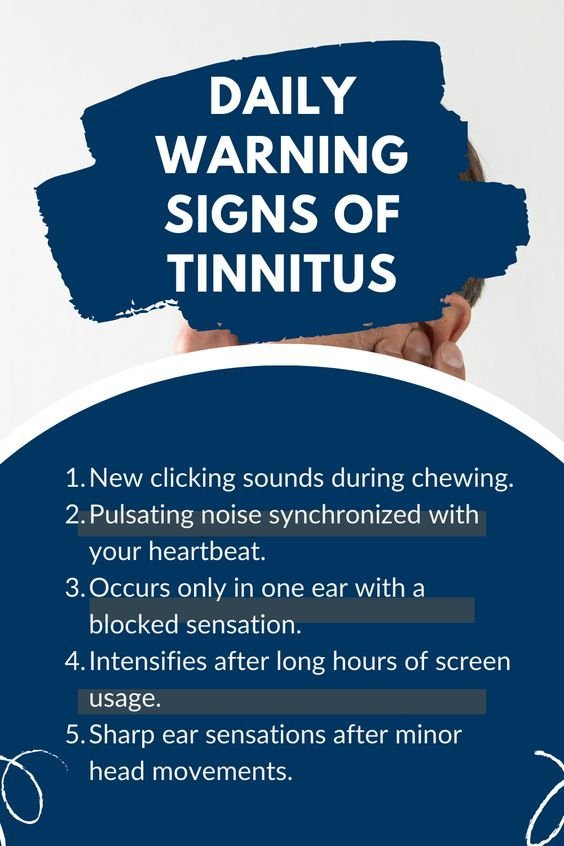
1. New Clicking Sounds During Chewing
Hearing clicking or popping noises while chewing, yawning, or moving the jaw can feel unsettling.
This type of sound is often linked to:
-
Jaw tension or misalignment
-
Muscle strain near the ear
-
Changes in pressure within the ear
Because the jaw and ear share nearby muscles and nerves, jaw movement can sometimes trigger sound sensations that resemble early tinnitus symptoms.
Why it matters: If clicking sounds are new or persistent, they may signal irritation or tension affecting the auditory system.
2. Pulsating Noise Synchronized With Your Heartbeat
A sound that seems to pulse in time with your heartbeat is different from typical ringing. Many people describe it as a whooshing, thumping, or rhythmic beat.
This can be associated with:
-
Blood flow changes near the ear
-
Increased sensitivity to internal sounds
-
Tension or pressure in the neck and head
Even if it comes and goes, this type of pulsating noise is worth noting.
Why it matters: Heartbeat-synced sounds may indicate changes in circulation or sensitivity that shouldn’t be ignored.
3. Sound Occurs Only in One Ear With a Blocked Sensation
Tinnitus that affects only one ear—especially when paired with a feeling of fullness or blockage—can feel confusing.
Possible contributors include:
-
Temporary ear congestion
-
Pressure imbalances
-
Sensory irritation in one ear
While this doesn’t always signal something serious, unilateral symptoms are important to monitor.
Why it matters: One-sided symptoms can sometimes point to localized issues that benefit from professional evaluation.
4. Tinnitus Intensifies After Long Hours of Screen Use
Many people notice tinnitus becomes more noticeable after extended screen time.
This can happen because:
-
Screen use increases neck and shoulder tension
-
Eye strain contributes to nervous system fatigue
-
Mental overload heightens sound sensitivity
Long periods of sitting, poor posture, and stress all play a role.
Why it matters: If tinnitus consistently worsens after screen use, it may be connected to muscle tension or nervous system overload rather than ear damage alone.
5. Sharp Ear Sensations After Minor Head Movements
Feeling sharp, brief sensations in the ear after turning your head, nodding, or adjusting posture can feel alarming.
These sensations may be linked to:
-
Muscle tightness in the neck
-
Nerve sensitivity
-
Changes in head or ear pressure
Even subtle movements can sometimes trigger symptoms when surrounding tissues are tense or irritated.
Why it matters: Movement-related symptoms often suggest a mechanical or muscular component that deserves attention.
Why These Daily Signs Are Easy to Miss
Most early tinnitus warning signs:
-
Come and go
-
Aren’t painful
-
Don’t happen constantly
Because of this, many people ignore them—until tinnitus becomes louder or more persistent.
But early awareness gives you more options.
What You Can Do If You Notice These Signs
You don’t need to panic—but you also shouldn’t ignore patterns.
Helpful steps include:
-
Tracking when symptoms appear or worsen
-
Reducing prolonged screen time
-
Paying attention to posture and neck tension
-
Staying hydrated
-
Scheduling a hearing or medical check-up if symptoms persist
These steps won’t diagnose tinnitus, but they can help you better understand what’s happening.
When to Seek Professional Advice
Consider speaking with a healthcare professional if:
-
Symptoms persist or worsen
-
Sounds are constant or increasing
-
One ear feels consistently blocked
-
Pulsating sounds continue regularly
Early evaluation can rule out treatable causes and provide peace of mind.
Final Thoughts
Tinnitus doesn’t always announce itself loudly. Often, it whispers first—through clicking sounds, pulsing noise, one-sided sensations, or subtle changes after daily habits like screen use.
Listening to these daily warning signs of tinnitus can help you take action sooner rather than later. Awareness isn’t about fear—it’s about staying informed and proactive.
👉 Save this for later, and ask yourself: Which of these signs have you noticed, even briefly?