Tinnitus can be confusing, frustrating, and sometimes exhausting. For many people, the ringing or buzzing doesn’t just affect hearing—it interferes with concentration, sleep, and everyday calm. While tinnitus may not have a single cure, what often gets overlooked is how certain daily habits can quietly make it worse.
In many cases, tinnitus intensifies not because of one major mistake, but due to small, repeated choices over time. This article breaks down the most common mistakes that worsen tinnitus and explains why avoiding them matters. With better awareness, you can take steps that support your ear health instead of unknowingly working against it.
Why Tinnitus Can Worsen Over Time
Tinnitus isn’t always static. Its intensity can change depending on lifestyle, environment, and how early warning signs are handled. The ears and auditory system are sensitive, and repeated stress—whether from noise, diet, or neglect—can amplify symptoms.
The key is not panic, but prevention. Many of the most damaging mistakes are also the easiest to correct.
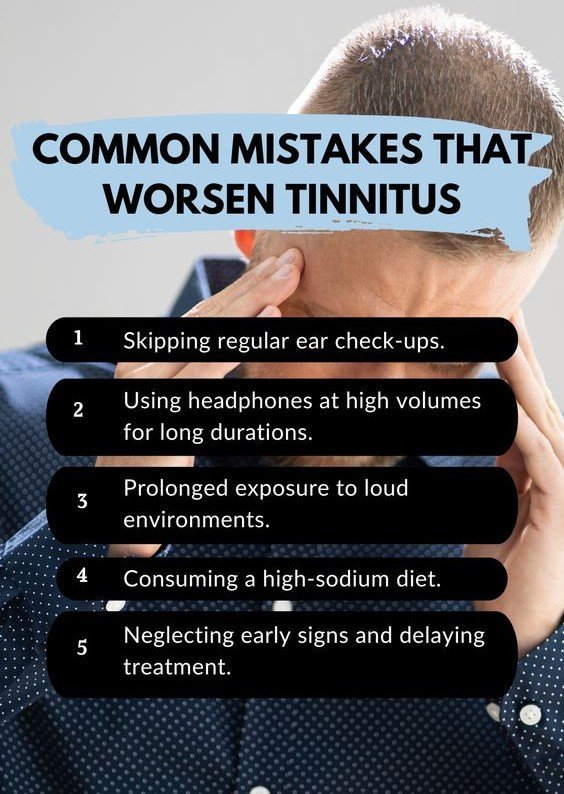
1. Skipping Regular Ear Check-Ups
One of the most common mistakes is avoiding routine ear check-ups, especially when tinnitus feels mild or manageable.
Skipping evaluations can:
-
Delay identification of underlying causes
-
Allow hearing issues to progress unnoticed
-
Miss early intervention opportunities
Even subtle changes in hearing health can influence tinnitus over time.
Helpful approach: If tinnitus persists or changes in pitch or intensity, regular check-ups help monitor what’s happening and rule out treatable issues early.
2. Using Headphones at High Volumes for Long Periods
Listening to audio through headphones is part of modern life—but volume and duration matter more than most people realize.
Prolonged exposure to loud sound through headphones can:
-
Overstimulate auditory nerves
-
Increase tinnitus intensity
-
Contribute to long-term hearing strain
This risk increases when volume is used to block background noise.
Smarter habit: Lower the volume, take listening breaks, and follow the “60/60 rule”—no more than 60% volume for 60 minutes at a time.
3. Prolonged Exposure to Loud Environments
Concerts, traffic noise, construction sites, or loud workplaces can gradually worsen tinnitus, even if exposure doesn’t feel painful at the moment.
Repeated loud noise exposure may:
-
Damage delicate hair cells in the inner ear
-
Increase auditory system sensitivity
-
Make tinnitus episodes more frequent
The effects are often cumulative, not immediate.
Protective step: Use hearing protection when possible and give your ears quiet recovery time after loud environments.
4. Consuming a High-Sodium Diet
Diet doesn’t cause tinnitus, but it can influence how noticeable symptoms feel.
High sodium intake may:
-
Affect blood flow to the inner ear
-
Contribute to fluid imbalance
-
Increase pressure-related ear sensations
For some people, this can intensify ringing or fullness in the ears.
Balanced approach: Reducing processed foods and moderating salt intake can support circulation and overall ear health without extreme dietary changes.
5. Neglecting Early Signs and Delaying Action
Many people wait until tinnitus becomes unbearable before taking it seriously. Unfortunately, early signals are often the best time to act.
Ignoring early signs can:
-
Allow symptoms to worsen gradually
-
Increase stress and frustration later
-
Reduce the effectiveness of supportive strategies
Early awareness doesn’t mean alarm—it means attention.
What helps: Notice changes in sound, frequency, or how tinnitus affects sleep and focus. Addressing these early can make management easier long-term.
Supportive Habits That Can Help
Avoiding mistakes is powerful, but supportive daily habits also matter:
-
Manage stress levels
-
Protect hearing consistently
-
Maintain healthy circulation
-
Get adequate rest
Tinnitus management works best when it’s proactive, not reactive.
Final Thoughts
Tinnitus often worsens not from one major event, but from habits that quietly strain the auditory system over time. By avoiding these common mistakes that worsen tinnitus, you give your ears a better chance to stay stable, supported, and less reactive.
Small changes—made consistently—can make a meaningful difference. Awareness is the first step toward calmer days and better ear health.
👉 Save this article for reference and revisit it whenever tinnitus feels more noticeable.
Which of these habits do you think might be affecting you most?