If you’ve ever brushed off mild discomfort—especially around your ears—you’re not alone. Many people ignore early symptoms until they become harder to manage. The truth is, small daily habits or overlooked signs can quietly worsen hearing issues over time.
The good news? Most of these problems are completely preventable. In this guide, we’ll walk through the 4 common mistakes that worsen symptoms, why they matter, and how you can protect your hearing before things escalate.
Let’s dive in and make hearing health a little easier to manage.
1. Ignoring Mild Symptoms
It’s easy to dismiss early signs like faint ringing, temporary muffled hearing, or occasional discomfort. You tell yourself, “It’ll pass,” and move on. But here’s the thing: those tiny signals are often your body’s way of asking for attention.
Why This Matters
-
Mild symptoms can point to early-stage tinnitus, ear infections, or hearing loss.
-
Catching them early can prevent long-term complications.
-
The sooner you address the issue, the higher your chances of full recovery.
What You Can Do
-
Keep a simple “symptom log” on your phone for patterns.
-
If symptoms persist for more than 48–72 hours, schedule a check-up.
-
Avoid inserting cotton buds, hairpins, or any objects into the ear—this often worsens sensitivity.
Mild doesn’t mean meaningless. Treat early signs as helpful clues rather than annoyances.
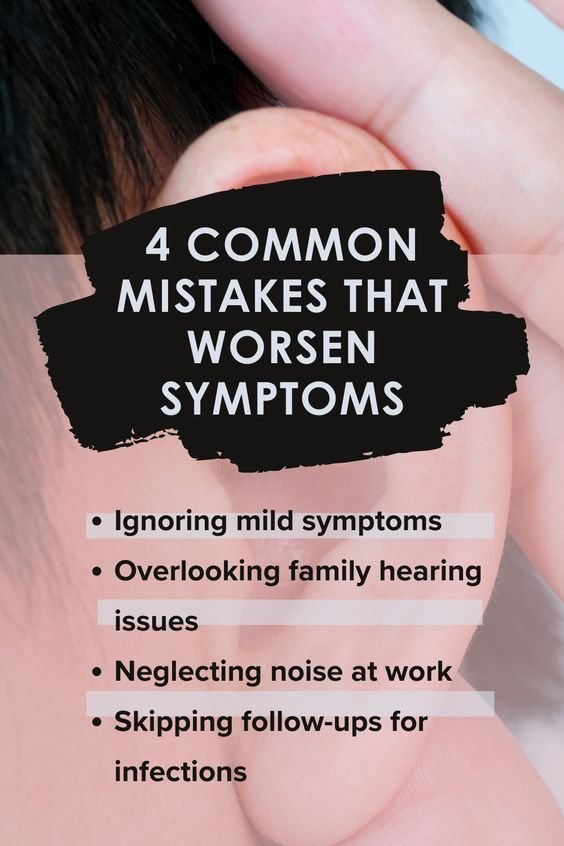
2. Overlooking Family Hearing Issues
Hearing health is more connected to genetics than most people realize. If parents, grandparents, or siblings struggle with hearing problems, there’s a chance you may face similar challenges—especially if symptoms are appearing already.
Why This Matters
-
Family history can increase the likelihood of early-onset hearing loss.
-
It can affect how you respond to noise exposure and infections.
-
Understanding your genetic background helps your doctor tailor long-term care.
Smart Steps to Take
-
Talk openly with family about any hearing challenges they’ve had.
-
Share this information during medical appointments.
-
Get routine hearing checks even if you feel “mostly fine.”
Think of family history as early warning, not destiny—it simply helps you stay prepared.
3. Neglecting Noise at Work
If your workplace is loud—even occasionally—it can have a long-lasting effect on your hearing. This includes construction sites, workshops, restaurants, manufacturing facilities, airports, and even offices with constant machine noise.
Why This Matters
-
Prolonged exposure to noise above 85 decibels can cause permanent damage.
-
Even short bursts of loud sound (like machinery starting up) can irritate the inner ear.
-
Noise-related hearing damage is often gradual, so you may not notice it until symptoms worsen.
How to Stay Protected
-
Use earplugs, noise-reducing earmuffs, or custom-fit hearing protection.
-
Step away from loud environments during breaks when possible.
-
Ask your employer about workplace noise assessments or protective equipment.
Your ears are working hard every day—give them the protection they deserve.
4. Skipping Follow-Ups for Infections
Ear infections often feel better quickly, which makes it tempting to skip follow-up appointments. But even when the pain fades, inflammation or fluid buildup can still be present.
Why This Matters
-
Untreated infections may lead to chronic inflammation.
-
Persistent fluid can cause temporary hearing loss or tinnitus.
-
Recurring infections weaken the ear’s natural defenses.
What You Should Do
-
Always complete your full course of medication—even if symptoms disappear.
-
Attend follow-up appointments to ensure healing is complete.
-
Watch for lingering fullness, mild pain, or popping sounds; these are signs the infection may not be fully resolved.
Taking infections seriously prevents long-term issues that are harder to treat later.
How to Stay Ahead of Symptoms: Simple Habit Checklist
Here’s a quick, practical list you can save or screenshot:
-
Listen to early symptoms instead of pushing through them.
-
Ask family about their hearing health history.
-
Use workplace hearing protection consistently.
-
Take ear infections seriously and follow through with your doctor’s plan.
-
Lower everyday noise exposure—turn down volume, use hands-free devices, and take quiet breaks.
Small habits add up to big improvements when it comes to your hearing.
Final Thoughts
Your hearing is something you rarely think about—until something feels “off.” By avoiding these 4 common mistakes that worsen symptoms, you can protect your ears, respond earlier, and reduce the risk of long-term damage. The key is paying attention, taking small steps, and giving your ears the care they deserve.
Save this post for later, and share it with someone who needs a gentle reminder to prioritize their hearing health. Your future self will thank you.