Tinnitus can be overwhelming — especially when the ringing, buzzing, or humming intensifies suddenly. While the condition affects everyone differently, certain habits and lifestyle choices can make symptoms more noticeable or harder to manage. Understanding these triggers is an important step toward maintaining comfort and protecting long-term hearing health.
Many people unknowingly worsen tinnitus through everyday patterns that seem harmless, but with a few adjustments, symptoms can sometimes feel more manageable. Below are five common mistakes that may aggravate tinnitus and practical suggestions to help you take better control of your auditory well-being.
1. Ignoring Early Symptoms
Many people overlook mild ringing or occasional ear noise, expecting it to disappear on its own. However, early symptoms can sometimes hint at underlying causes like earwax buildup, sound exposure, or stress.
Ignoring tinnitus may lead to:
-
Persistent symptom progression
-
Delayed treatment or evaluation
-
More difficulty identifying triggers later
Awareness is the first line of defense. Tracking when symptoms appear — after loud events, during stress, or at night — can help you understand patterns and respond sooner rather than later.
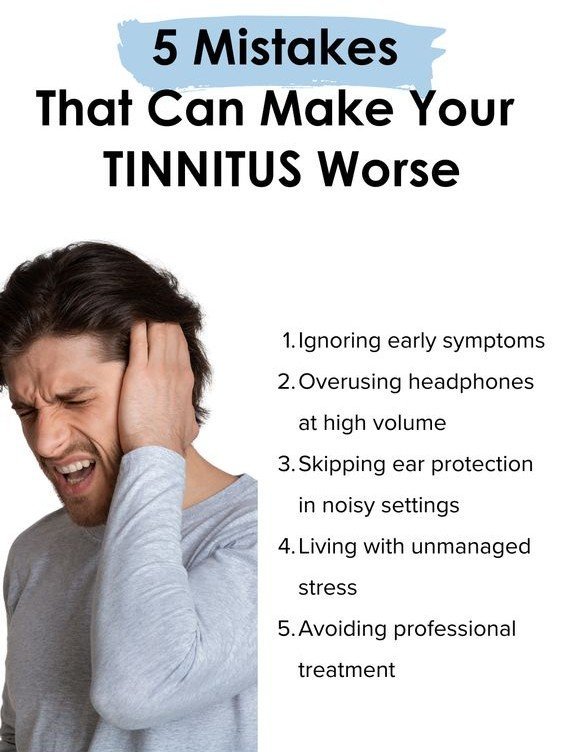
2. Overusing Headphones at High Volume
Loud sound exposure is one of the most common tinnitus triggers. Headphones, especially in-ear types, send sound directly toward the eardrum, and high volume over time can strain delicate auditory cells.
Helpful volume safety habits:
-
Keep volume below 60%
-
Avoid long listening sessions without breaks
-
Consider noise-cancelling headphones so you don’t need high volume to hear clearly
Protecting your ears today can make a meaningful difference in symptoms later.
3. Skipping Ear Protection in Noisy Environments
Concerts, construction sites, traffic, sporting events, gyms, and even loud appliances can contribute to tinnitus intensity. Without ear protection, sudden or prolonged noise may cause temporary spikes or long-term sensitivity.
Practical ways to protect your hearing:
-
Carry earplugs in your bag or car
-
Use over-ear muffs when working with tools
-
Step away from speakers or loud sound sources when possible
Noise reduction doesn’t mean avoiding life — it means participating intelligently.
4. Living With Unmanaged Stress
Stress is a major amplifier of tinnitus. When the nervous system is tense, the brain becomes more aware of internal sounds, making tinnitus feel louder or more intrusive.
Small, manageable stress management practices include:
-
Gentle breathing exercises
-
Light stretching, yoga, or walking
-
Journaling or mindfulness breaks
-
Limiting caffeine if it increases anxiety
Even a few minutes of daily relaxation can create measurable calm for the auditory system.
5. Avoiding Professional Support
Some people struggle with tinnitus silently, unsure where to turn. Not seeking evaluation may delay solutions such as ear cleaning, sound therapy, or personalized coping strategies.
A professional may help with:
-
Identifying hearing or medical factors
-
Recommending sound-based therapies
-
Providing tools for reducing symptom impact
-
Offering reassurance and clarity
Reaching out for support isn’t a last resort — it’s a smart move toward improved quality of life.
Healthy Ways to Support Tinnitus Management
While results differ for everyone, the following habits may help reduce intensity or make symptoms easier to cope with:
-
Lower exposure to loud sound when possible
-
Practice calming routines before bedtime
-
Maintain hydration and balanced nutrition
-
Play soft background sound (white noise, nature audio, fans)
-
Take listening breaks throughout the day
Tinnitus may not disappear quickly, but habits can influence how the condition feels day-to-day.
Final Thoughts
Tinnitus can feel frustrating, unpredictable, and distracting — but small changes in daily behavior can make a meaningful difference. By staying aware of early symptoms, protecting your hearing, managing stress, and seeking professional guidance when needed, you give yourself a greater sense of control and comfort. No single solution works for everyone, but thoughtful habits can help reduce aggravation and improve your relationship with sound. Be patient with yourself, stay consistent, and take steps that support your hearing health long term.