Ear health doesn’t get as much attention as eyesight or dental care — until something feels wrong. Many people unknowingly adopt habits that seem harmless but may actually put their ears at risk. Understanding what’s true (and what isn’t) can help protect hearing, prevent infection, and support long-term auditory wellness.
Here are four misconceptions many people still believe, along with what’s actually true about ear care.
🧼 1. “Over-cleaning Keeps Ears Healthy”
In reality, the ear cleans itself. Wax may seem unnecessary, but it’s actually important — it protects the ear canal, traps dust and bacteria, and prevents irritation. Over-cleaning removes this natural barrier and may even push wax deeper, leading to blockages or infection.
Gentle rule of thumb:
Clean only what you can see — nothing should enter the ear canal without medical guidance.
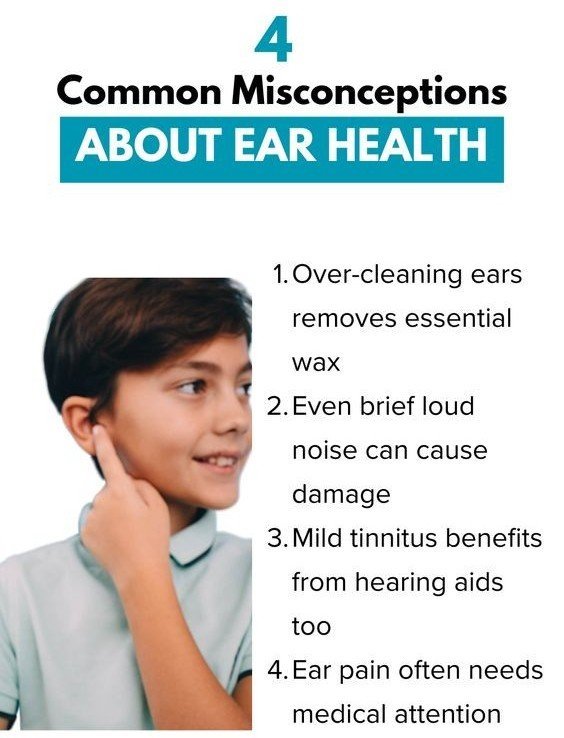
🔊 2. “Brief Loud Noise Can’t Cause Damage”
Hearing damage isn’t only caused by hours of noise exposure. A single loud burst, such as fireworks, concerts, or machinery, can harm sensitive inner-ear hair cells. Once damaged, they don’t regenerate — making prevention extremely important.
Helpful habits include:
-
Wearing hearing protection in loud environments
-
Keeping headphone volume moderate
-
Taking listening breaks regularly
A few seconds can matter more than we think.
🔔 3. “Mild Tinnitus Doesn’t Need Support”
Tinnitus — even when mild — can benefit from management strategies. Hearing aids, sound therapy, and lifestyle adjustments may reduce intensity and improve sound tolerance. Early support is often easier than waiting for symptoms to worsen.
Better sooner than later:
Treating tinnitus early may lead to better long-term comfort.
⚠️ 4. “Ear Pain Will Go Away On Its Own”
While some mild discomfort resolves naturally, persistent or recurring ear pain should not be ignored. It can be a sign of infection, fluid buildup, jaw tension, or other underlying issues that may require medical care.
Seek evaluation if:
-
Pain lasts more than a few days
-
Hearing changes or pressure develops
-
There is discharge, dizziness, or fever
Early guidance can prevent more serious complications.
⭐ Final Thoughts
Healthy ears aren’t just about hearing clearly — they’re about comfort, balance, and quality of life. Avoiding over-cleaning, protecting your ears from loud noise, addressing tinnitus gently, and knowing when to seek care can make a meaningful difference over time.
A little ear awareness goes a long way.