When it comes to lifting—whether it’s at the gym or during your daily routine—technique matters more than strength. A small mistake, like bending the wrong way or rushing a lift, can lead to serious back pain or long-term joint stress. The good news? Most of these errors are easy to fix once you’re aware of them.
Here are 5 common lifting mistakes that could be holding you back (literally) and how to correct them for better strength and safety.
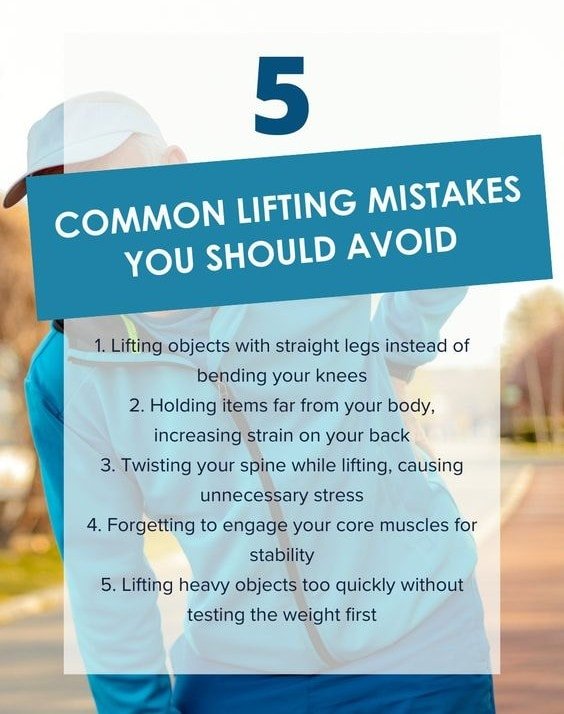
1. Lifting with Straight Legs Instead of Bending Your Knees
One of the most frequent lifting errors is keeping your legs straight. This forces your lower back to take the entire load instead of your stronger leg muscles. Always bend at the knees, not your waist. Think of it as sitting back into a squat before standing tall with the object close to your body.
This small adjustment can drastically reduce lower back strain and make lifting feel smoother and more natural.
2. Holding Items Too Far from Your Body
When you hold an object away from your torso, you increase the pressure on your spine and shoulders. Imagine holding a heavy box straight out—your arms and back tire instantly. Instead, keep objects close to your body to share the load evenly between your legs, arms, and core.
This simple change improves control, reduces fatigue, and helps prevent unnecessary injuries.
3. Twisting Your Spine While Lifting
Twisting your spine under load is one of the most dangerous lifting habits. It often happens when we turn mid-lift to set something down. Instead, move your feet to turn your whole body in one motion.
Keeping your spine aligned not only prevents sprains but also protects your discs from compression or rotation injuries that can develop over time.
4. Forgetting to Engage Your Core Muscles
Your core isn’t just about abs—it’s your body’s stability system. Engaging your core before you lift acts like an internal support belt that steadies your spine. To activate it, take a deep breath and tighten your abdominal muscles as if bracing for a light punch.
A strong, engaged core keeps your posture upright and ensures you’re using your entire body efficiently.
5. Lifting Too Quickly Without Testing the Weight
Speed and strength don’t always mix. Many injuries happen when people lift heavy items without checking the weight first. Always test the load by nudging or slightly lifting one edge before committing to a full lift.
Controlled movements build safer habits and let you adjust your stance or grip before straining your muscles.
Bonus Tip: Know When to Ask for Help
Even with perfect form, some weights are just too heavy for one person. There’s no shame in using lifting aids or asking for assistance. It’s far better to prevent injury than to recover from one.
✅ Final Thoughts
Lifting safely isn’t just about avoiding pain—it’s about longevity, strength, and confidence. By fixing these five common mistakes, you’ll protect your back, improve your posture, and make everyday movement easier.
Pin this guide for later or share it with someone who could use a reminder before their next lift! 💪