Knee pain doesn’t always come from injuries or intense workouts. In many cases, it’s the small, repeated habits we barely notice that place extra stress on the joints. These common errors that strain knees often show up in everyday movement—walking, exercising, sleeping, or even doing household chores. Over time, they can irritate the knee joint and make simple activities uncomfortable.
The good news? Once you’re aware of these mistakes, they’re usually easy to adjust. Let’s walk through the five most common knee-straining habits and what you can do instead.
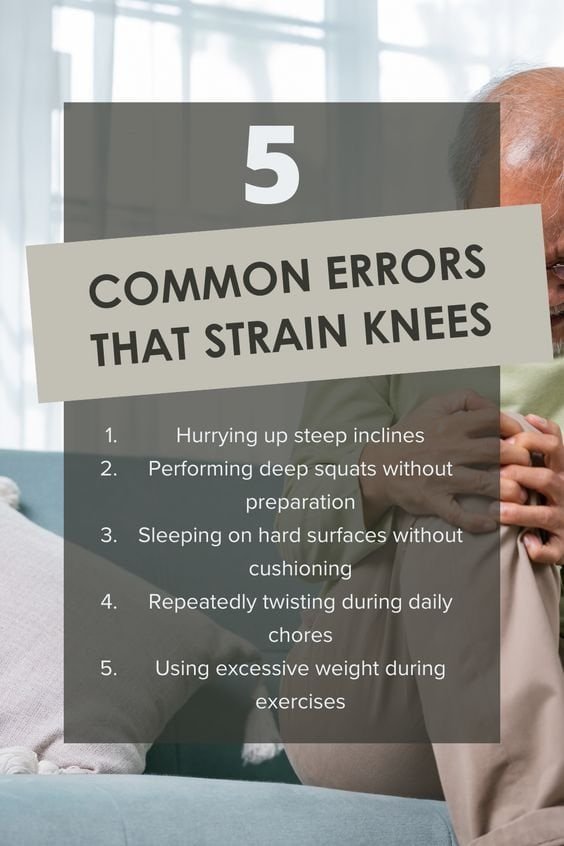
1. Rushing Up Steep Inclines or Stairs
Hurrying uphill or climbing stairs quickly increases pressure on the knees, especially if strength or balance is limited.
Why this strains knees:
-
Extra force is placed on the knee joint
-
Muscles don’t have time to support movement
-
Poor alignment becomes more likely
What helps instead: Slow down, use handrails when available, and take shorter steps. Controlled movement shifts the load away from the knees and into supporting muscles.
2. Doing Deep Squats Without Preparation
Deep squats place significant stress on the knees—especially if flexibility, strength, or technique isn’t ready.
Common issues include:
-
Knees collapsing inward
-
Limited hip mobility
-
Lack of warm-up
What helps instead: Start with shallow or supported squats, warm up first, and focus on slow, controlled movement. Knee-friendly strengthening should progress gradually.
3. Sleeping on Hard Surfaces Without Cushioning
Sleeping positions affect joint comfort more than people realize. Hard surfaces without cushioning can put pressure on knees, especially side sleepers.
This can lead to:
-
Joint stiffness
-
Morning knee pain
-
Misalignment during sleep
What helps instead: Use a pillow between the knees when side sleeping, or a small cushion under the knees when sleeping on your back. Proper support keeps the joint in a neutral position overnight.
4. Repeated Twisting During Daily Chores
Twisting motions—especially while carrying weight—are a common but overlooked cause of knee strain.
Examples include:
-
Turning while lifting laundry
-
Twisting to reach items
-
Pivoting quickly instead of stepping
What helps instead: Turn with your feet instead of twisting through the knee. Small changes in how you move can significantly reduce joint stress.
5. Using Excessive Weight During Exercises
Adding too much weight too quickly places strain on the knees before muscles are ready to support the load.
Potential consequences:
-
Joint irritation
-
Poor form under load
-
Increased injury risk
What helps instead: Use lighter weights with better control. Strength improves when muscles—not joints—handle the workload.
Why These Errors Add Up Over Time
The knee joint absorbs repeated stress throughout the day. When multiple knee-straining habits stack up, discomfort often appears gradually—not suddenly.
Over time, these errors may lead to:
-
Ongoing soreness
-
Reduced mobility
-
Hesitation to move or exercise
Addressing small habits early helps prevent long-term problems.
Signs Your Knees Are Being Overstrained
Pay attention to early warning signs:
-
Pain after daily activities
-
Stiffness when standing up
-
Discomfort climbing stairs
-
Swelling or warmth around the joint
These signals often mean your knees need less strain—not more effort.
Simple Daily Habits That Protect Knee Health
Knee-friendly habits don’t need to be complicated:
-
Move slowly and deliberately
-
Use cushions during rest and sleep
-
Strengthen gradually
-
Avoid twisting motions
-
Respect pain signals
Consistency is more important than intensity.
When to Seek Professional Advice
If knee pain persists despite habit changes, professional guidance can help identify alignment, strength, or mobility issues that need targeted support.
Early evaluation often prevents bigger setbacks later.
Final Thoughts
These 5 common errors that strain knees often hide in everyday routines rather than obvious injuries. Rushing movements, poor exercise preparation, unsupported sleep positions, twisting motions, and excessive weights all quietly add stress to the joints. The good news is that small adjustments can make a meaningful difference. By moving with awareness and respecting your knees’ limits, you support comfort, mobility, and confidence in daily life.
Save this guide and reflect on your daily habits. Which one of these knee-straining mistakes do you notice most often in your routine?