That constant ringing or buzzing sound in your ears isn’t always “just stress.” Tinnitus affects millions of people worldwide — and while it’s often harmless, it can sometimes signal an underlying issue you shouldn’t ignore.
In this post, we’ll uncover 7 common causes of tinnitus that may surprise you — and share why identifying the root cause is the first step toward lasting relief.
1. High Blood Pressure
Your ears are sensitive to blood flow. When blood pressure rises, it can cause changes in circulation that lead to pulsating or rhythmic ringing sounds, known as pulsatile tinnitus.
Tip: Keep your blood pressure in check with regular exercise, reduced salt intake, and routine health checks. Managing heart health can ease both tinnitus and overall well-being.
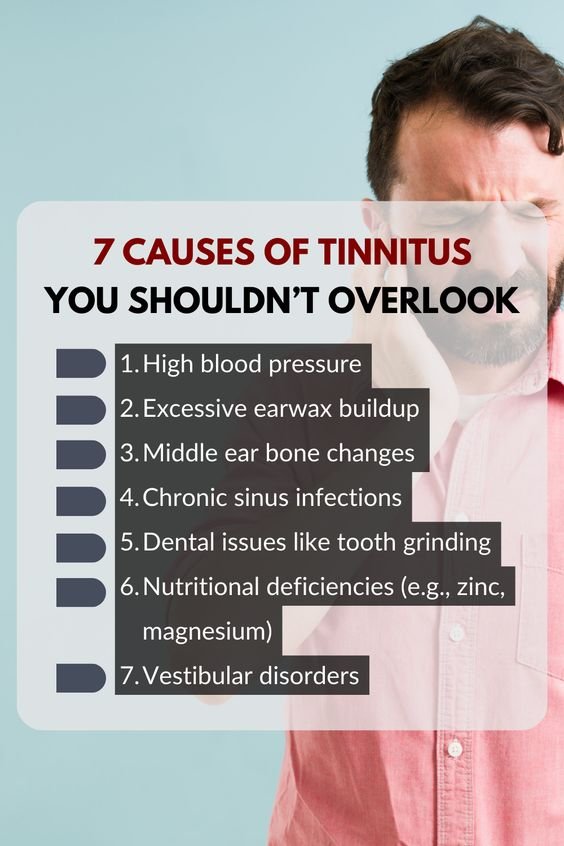
2. Excessive Earwax Buildup
Earwax is protective — but too much of it can block the ear canal, putting pressure on the eardrum and creating that persistent ringing or muffled hearing.
What helps: Avoid using cotton swabs inside the ear. Instead, try a few drops of warm olive oil or see a healthcare professional for safe ear cleaning.
3. Middle Ear Bone Changes
Sometimes, tinnitus stems from otosclerosis — a condition where the tiny bones in the middle ear stiffen, affecting sound transmission. This can lead to both hearing loss and ringing sounds.
Tip: Early diagnosis matters. If you notice gradual hearing changes, consult an ENT specialist for evaluation and treatment options.
4. Chronic Sinus Infections
Persistent sinus issues can create pressure in the inner ear, causing temporary tinnitus. The buildup of mucus or fluid interferes with normal ear function, making it harder for sound to travel clearly.
Quick relief: Stay hydrated, use saline nasal sprays, and consider steam inhalation to ease congestion and reduce pressure in your ears.
5. Dental Issues Like Tooth Grinding
Surprisingly, your jaw and ears are closely connected. Bruxism — or chronic teeth grinding — can strain the jaw joint (TMJ), which sits just beside the ear canal. This tension often radiates as tinnitus or ear pain.
Try this: Use a night guard if you grind your teeth, and practice gentle jaw relaxation exercises to release tension.
6. Nutritional Deficiencies
Your ears rely on nutrients like zinc, magnesium, and vitamin B12 for proper nerve and blood vessel function. Deficiencies can affect the auditory system, making tinnitus more noticeable.
Boost your nutrition: Eat a balanced diet with leafy greens, nuts, whole grains, and lean protein — or ask your doctor about supplementation.
7. Vestibular Disorders
Conditions that affect balance, such as Ménière’s disease or vestibular neuritis, can trigger tinnitus along with dizziness or ear fullness. These disorders often arise from fluid imbalances or inner ear inflammation.
Next step: If you experience ringing alongside vertigo or balance problems, seek medical evaluation. Proper diagnosis can significantly improve treatment outcomes.
When to See a Professional
While mild tinnitus may fade on its own, persistent or worsening symptoms should never be ignored — especially if accompanied by hearing loss, dizziness, or pain. Identifying the cause early can make all the difference.
Final Thoughts
Tinnitus isn’t just an annoyance — it’s your body’s way of signaling that something might be off. By addressing these 7 overlooked causes, you can take steps toward relief, protect your hearing, and regain peace of mind.
👉 Pin this post for later to share with someone who might be struggling with ringing in their ears.