That persistent ringing, buzzing, or whooshing sound in your ears isn’t always “just in your head.” Tinnitus affects millions worldwide, and while it’s often harmless, it can sometimes signal an underlying issue. Understanding what’s causing it is the first step toward relief. From loud music to circulation problems, there are many reasons tinnitus can develop — and some are easier to fix than you think.
In this post, we’ll explore 8 common causes of tinnitus you shouldn’t ignore, plus simple steps to help you protect your hearing and keep the noise at bay.
1. Loud Noise Exposure
Listening to loud music, working in noisy environments, or attending concerts without ear protection can damage the tiny hair cells inside your inner ear. Once these cells are damaged, they can’t regenerate, leading to tinnitus and hearing loss.
🎧 Tip: Always use earplugs in loud settings and follow the 60/60 headphone rule — 60% volume for no more than 60 minutes at a time.
2. Age-Related Hearing Loss
As we age, the sensory cells in our ears naturally weaken, making tinnitus a common side effect of age-related hearing decline.
👂 Tip: Regular hearing check-ups and hearing aids (if prescribed) can help minimize tinnitus perception and improve sound clarity.
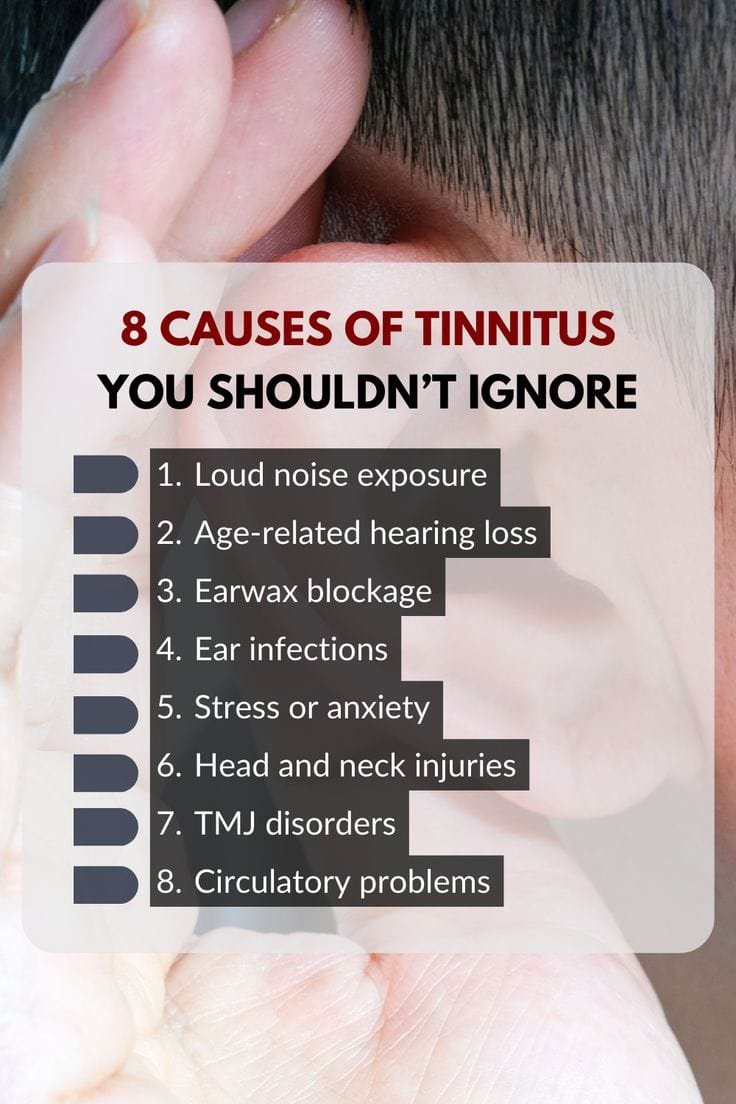
3. Earwax Blockage
Excess earwax can trap sound and pressure, leading to ringing or muffled hearing.
🧴 Tip: Avoid using cotton swabs — they can push wax deeper. Instead, use ear drops or have a professional remove buildup safely.
4. Ear Infections
Fluid buildup or inflammation in the middle ear can disrupt sound transmission and cause temporary tinnitus.
💧 Tip: Treat infections early and keep your ears dry after swimming or showering to prevent bacterial growth.
5. Stress or Anxiety
When stress levels rise, tinnitus often feels louder. Emotional tension affects your body’s nervous system and can heighten your perception of internal sounds.
🧘 Tip: Try relaxation techniques like mindfulness, yoga, or simple breathing exercises to calm both your mind and your ears.
6. Head and Neck Injuries
Accidents or whiplash can impact nerves, blood flow, or muscles around the ears, leading to tinnitus symptoms.
🚑 Tip: Seek medical attention for any head or neck trauma — early care can prevent long-term complications.
7. TMJ Disorders
The temporomandibular joint (TMJ), located near your ear, can affect hearing when inflamed or misaligned. TMJ issues often cause a clicking jaw along with tinnitus.
🦷 Tip: Consult a dentist or specialist if you experience jaw pain, and avoid chewing hard foods to ease tension.
8. Circulatory Problems
Poor blood flow, high blood pressure, or vascular issues can create a “pulsing” tinnitus that beats in rhythm with your heartbeat.
❤️ Tip: Keep your heart healthy through regular exercise, a balanced diet, and stress management to improve blood circulation to the ears.
Final Thoughts
Tinnitus might feel mysterious, but it usually has a cause — and sometimes, a manageable one. By identifying these eight common triggers, you can take proactive steps to protect your hearing, reduce discomfort, and find some peace from the ringing. Don’t ignore symptoms that persist or worsen over time — they’re your body’s way of asking for attention. Take the first step today: book a hearing check-up and start tuning back into the sounds that really matter.