Back pain is one of the most common complaints among people who sit for long hours, especially at desks. Whether you work from home or in an office, poor posture and uncomfortable furniture can quietly strain your spine over time. That’s where ergonomic furniture makes a difference.
Ergonomic furniture is designed to support the body’s natural alignment and movement. Instead of forcing you to adapt to the furniture, it adapts to you. Below are four back-saving benefits of ergonomic furniture and why it plays such an important role in long-term comfort and productivity.
Why Ergonomic Furniture Matters for Back Health
The human body isn’t built to sit still for hours in awkward positions. When chairs, desks, and screens aren’t properly aligned, muscles work harder than they should, leading to fatigue, stiffness, and pain.
Ergonomic furniture helps by:
-
Supporting natural posture
-
Reducing unnecessary strain
-
Encouraging healthy movement
-
Making long work sessions more manageable
Small improvements in setup can lead to noticeable relief over time.
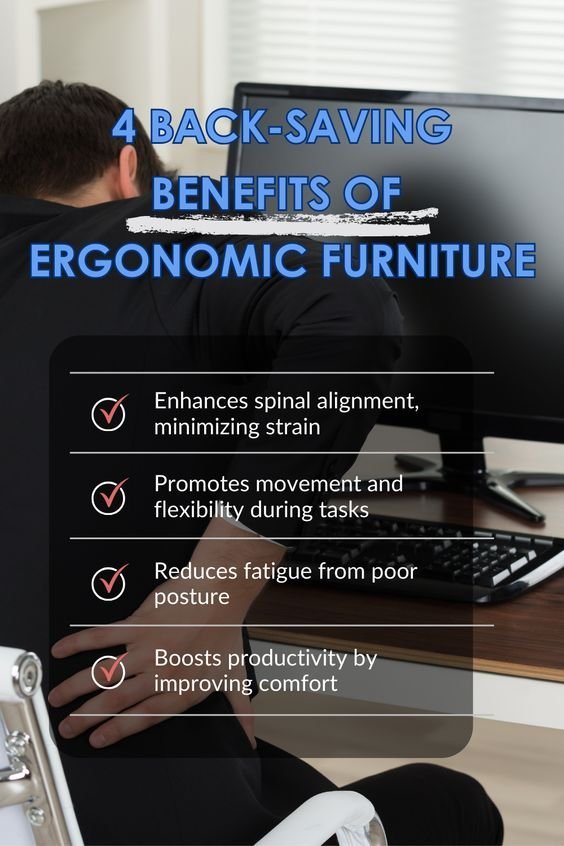
1. Enhances Spinal Alignment and Minimizes Strain
One of the biggest benefits of ergonomic furniture is improved spinal alignment.
Properly designed chairs and desks help:
-
Support the natural curve of the spine
-
Keep the neck, shoulders, and lower back aligned
-
Reduce pressure on spinal discs
When your spine is supported correctly, muscles don’t need to compensate as much, which lowers the risk of chronic strain.
Why this matters: Consistent poor alignment can gradually lead to long-term back discomfort. Ergonomic support helps prevent that buildup.
2. Promotes Movement and Flexibility During Tasks
Staying completely still for long periods isn’t healthy—even with good posture.
Ergonomic furniture encourages:
-
Subtle movement while sitting
-
Position changes throughout the day
-
Better flexibility during tasks
Features like adjustable chairs, flexible backrests, and sit-stand desks make it easier to move naturally instead of staying locked in one position.
Simple benefit: More movement means less stiffness and better circulation.
3. Reduces Fatigue Caused by Poor Posture
Poor posture forces muscles to stay tense longer than they should. Over time, this leads to fatigue—not just in the back, but throughout the body.
Ergonomic furniture helps reduce fatigue by:
-
Supporting muscles instead of overworking them
-
Allowing the body to relax into proper alignment
-
Minimizing unnecessary muscle tension
When the body isn’t constantly fighting gravity or poor positioning, energy levels stay more stable.
4. Boosts Productivity by Improving Comfort
Comfort and productivity are closely linked.
When discomfort is reduced:
-
Focus improves
-
Breaks become more intentional instead of pain-driven
-
Work feels more manageable
Ergonomic furniture doesn’t just protect your back—it helps create a work environment where discomfort isn’t a constant distraction.
Realistic outcome: Better comfort often leads to better consistency, not just higher output.
How Ergonomic Furniture Supports Long-Term Back Health
Over time, ergonomic furniture:
-
Reduces repeated stress on the spine
-
Encourages healthier daily habits
-
Lowers the risk of posture-related back pain
It’s not a cure-all, but it’s a powerful preventative tool—especially when combined with regular movement and stretching.
Common Mistake to Avoid
A common mistake is assuming ergonomic furniture works automatically. Even the best setup needs:
-
Proper adjustment
-
Occasional movement
-
Awareness of posture
Furniture should support good habits—not replace them.
When Ergonomic Furniture Helps the Most
Ergonomic furniture is especially helpful if you:
-
Sit for several hours daily
-
Work at a computer
-
Experience stiffness or back discomfort
-
Want to prevent future back problems
Early changes often make the biggest difference.
Final Thoughts
Back pain doesn’t usually come from one bad day—it develops from repeated strain over time. Ergonomic furniture helps reduce that strain by supporting posture, encouraging movement, reducing fatigue, and improving overall comfort.
These back-saving benefits may feel subtle at first, but they compound with consistency. Supporting your spine today can make a noticeable difference in how your body feels tomorrow—and years from now.
👉 Save this guide if you spend long hours sitting and want to protect your back.