Back pain can be exhausting — it affects how you move, sit, sleep, and enjoy your day. When you’re in pain, you want solutions that actually help, not just temporary distractions. The good news is that there are treatment approaches many people find genuinely supportive, especially when practiced consistently over time.
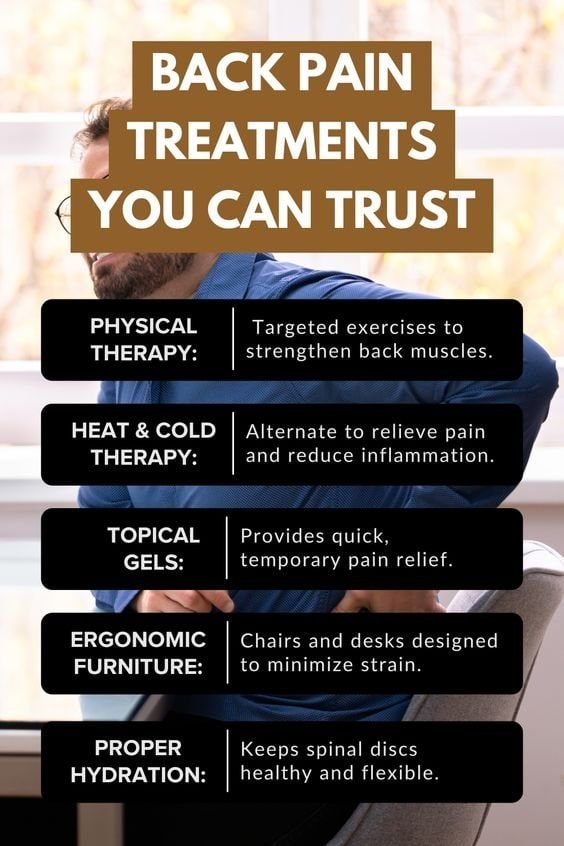
This guide breaks down five trusted methods for managing back pain — from physical therapy to hydration. Each one offers relief in a different way, and together they can form a strong foundation for long-term comfort and mobility.
1. Physical Therapy — Strength Built for Support
Physical therapy is one of the most researched and recommended treatments for back pain. Instead of masking symptoms, it strengthens the muscles that support your spine so you move with more stability and less strain.
Exercises often recommended by professionals include:
-
Gentle hamstring stretches
-
Pelvic tilts for spinal mobility
-
Glute bridges for hip and lower-back support
-
Light resistance band work to activate upper-back muscles
Results come with consistency — slow progress is still progress.
2. Heat & Cold Therapy — Calm for Stiffness and Inflammation
Heat and cold work differently, but both can help.
Cold therapy reduces inflammation and numbs sharp pain, especially after strain or repetitive use.
Heat therapy relaxes tight muscles and boosts circulation, easing stiffness and tension.
A simple routine many people follow:
| Step | Action |
|---|---|
| 1 | Use ice for 10–15 minutes during early pain or flare-ups. |
| 2 | Switch to heat to loosen muscles and increase mobility. |
| 3 | Repeat as needed, avoiding direct contact with skin. |
It’s a gentle approach — but remarkably effective for many.
3. Topical Gels — Quick, Temporary Relief
Topical gels and creams don’t solve the root issue, but they do help take the edge off — especially when back pain is interfering with movement or sleep.
They work well for:
-
Muscle tension days
-
Overworked back after lifting or sitting
-
Short-term relief during flare-ups
Think of them as a helpful support during tougher moments.
4. Ergonomic Furniture — Reduce Daily Strain
If you sit or stand for long periods, your environment might be working against your back. Ergonomic adjustments can make a noticeable difference by improving alignment and reducing pressure on the spine.
You can start small:
-
Add lumbar support to your chair
-
Raise your monitor to eye level
-
Keep feet flat or supported
-
Take stretch breaks every hour
Comfort is often built one habit at a time.
5. Proper Hydration — Fuel for Healthy Spinal Discs
Your spinal discs behave like cushions — and they need water to stay flexible, gel-like, and shock-absorbent. When you’re dehydrated, those discs can stiffen, making movement more uncomfortable.
Small hydration habits that help:
-
Drink water consistently throughout the day
-
Infuse with fruit if plain water feels boring
-
Add electrolytes during activity or heat
-
Balance caffeine with extra water intake
It’s a simple habit, but often overlooked.
⭐ Final Thoughts
Back pain rarely improves with just one solution — but a combination of small, steady habits can make everyday movement feel easier. Physical therapy strengthens. Heat and cold soothe. Ergonomic furniture protects. Topical gels offer quick relief when needed. And hydration quietly supports the spine from within.
Choose one to begin with, build gently, and notice what your body responds to. The path forward doesn’t have to be complicated — just consistent.
Save or share this if you’d like to reference these treatments later.
Which one feels like the best starting point for you? 👇