Back pain has a way of sneaking into daily life—sometimes suddenly, sometimes slowly. One day it’s mild stiffness, and before you know it, simple tasks like sitting, bending, or sleeping become uncomfortable.
What makes back pain tricky is that many people don’t realize how common—and preventable—it actually is. These back pain facts that could save your spine aren’t meant to scare you, but to give you clarity. Small, informed changes can make a real difference in how your spine feels years from now.
Let’s break down five facts everyone should know.
1. Most Adults Experience Back Pain at Least Once
One of the most eye-opening back pain facts is how common it is. Research consistently shows that around 80% of adults experience back pain at some point in their lives.
What this means for you:
-
Back pain isn’t a personal failure
-
You’re not alone if you’ve felt it
-
Early awareness matters
Because back pain is so widespread, prevention habits are incredibly valuable—even if you feel fine right now.
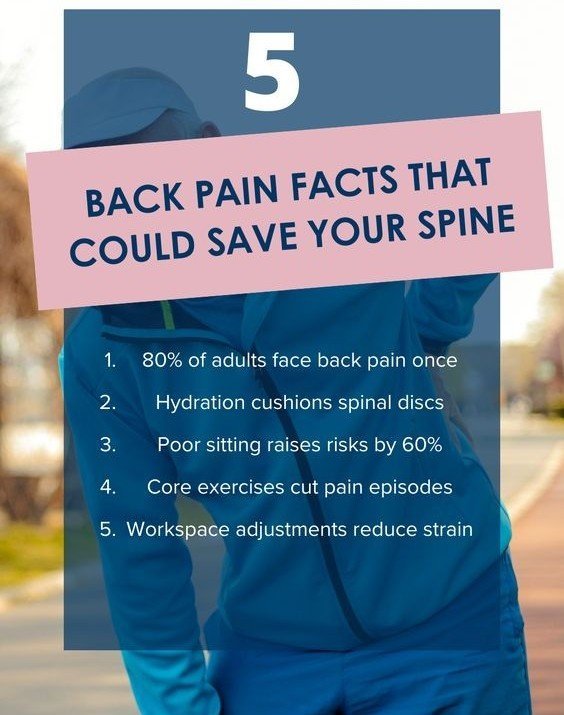
2. Hydration Helps Cushion Your Spinal Discs
Your spine isn’t solid bone stacked together. Between each vertebra are discs that act as shock absorbers—and those discs rely heavily on water.
Why hydration matters:
-
Spinal discs are largely made of water
-
Dehydration can reduce disc cushioning
-
Poor hydration may increase stiffness
Drinking water won’t magically cure back pain, but staying consistently hydrated supports spinal flexibility and comfort over time.
3. Poor Sitting Habits Significantly Increase Risk
Sitting might feel harmless, but how you sit matters more than how long you sit.
One of the most important back pain facts that could save your spine is that poor sitting posture significantly raises strain on the lower back—especially during desk work.
Common issues include:
-
Slouching
-
Leaning forward toward screens
-
Unsupported lower backs
Good posture reduces pressure on spinal structures and helps muscles work the way they’re meant to.
4. Core Exercises Can Reduce Pain Episodes
A weak core forces the lower back to do more work than it should.
Why core strength helps:
-
Supports the spine during movement
-
Reduces strain on the lower back
-
Improves balance and stability
Core exercises don’t need to be intense. Gentle movements like modified planks, pelvic tilts, or controlled movements can help reduce recurring pain when done consistently.
5. Small Workspace Adjustments Reduce Daily Strain
If you spend hours at a desk, your workspace setup matters more than your chair brand.
Helpful adjustments include:
-
Monitor at eye level
-
Feet flat on the floor or footrest
-
Back supported by the chair
-
Keyboard and mouse within easy reach
These changes reduce constant, low-level strain that adds up silently over weeks and months.
Why These Back Pain Facts Matter Long Term
Back pain usually isn’t caused by one bad movement—it’s often the result of repeated, overlooked habits.
These facts matter because they:
-
Highlight prevention over reaction
-
Encourage daily awareness
-
Shift focus to small, sustainable changes
Think of spine care like dental care: small daily habits beat emergency fixes.
Common Back Pain Myths to Ignore
To protect your spine properly, it helps to drop a few myths:
-
“Back pain only happens when you’re older”
-
“Rest is better than movement”
-
“Pain means you should stop all activity”
In many cases, appropriate movement and support—not total rest—lead to better outcomes.
Who Should Pay Extra Attention to These Facts
These back pain facts that could save your spine are especially important if you:
-
Sit for long hours
-
Work on computers or phones daily
-
Have a history of back pain
-
Feel stiffness after sleeping or sitting
Paying attention early can prevent long-term discomfort.
Simple Daily Habits That Support a Healthy Spine
You don’t need a major routine overhaul. Start small:
-
Drink water regularly
-
Take movement breaks
-
Adjust your sitting position
-
Strengthen your core gently
Consistency matters more than intensity.
Final Thoughts
Back pain doesn’t have to be an inevitable part of life. These 5 back pain facts that could save your spine show how hydration, posture, movement, and small environmental changes play a powerful role in spinal health. Awareness today leads to comfort tomorrow—and often prevents bigger problems later.
Save this post for reference and try applying just one change this week. Which fact surprised you the most, and which habit feels easiest to improve right now?