Back pain can sneak into your life in the simplest ways — a long day at your desk, lifting something heavy, or even sleeping the wrong way. And once it appears, everything from walking to sitting can feel harder than it should.
The good news? A few basic do’s and don’ts can dramatically reduce strain on your spine and help you manage pain much more comfortably.
This guide breaks down the essential habits that protect your back, plus the common mistakes that unknowingly worsen discomfort. Whether you’re dealing with occasional soreness or ongoing tension, these simple tips can help you move, sit, lift, and live with less pain.
1. DO Practice Proper Lifting Techniques
Incorrect lifting is one of the fastest ways to trigger back pain. To protect your spine, always:
-
Bend at your knees, not your waist
-
Keep the object close to your body
-
Engage your core for stability
-
Lift slowly and in one smooth motion
Think of your legs as powerful support tools — they should do the heavy work, not your lower back.
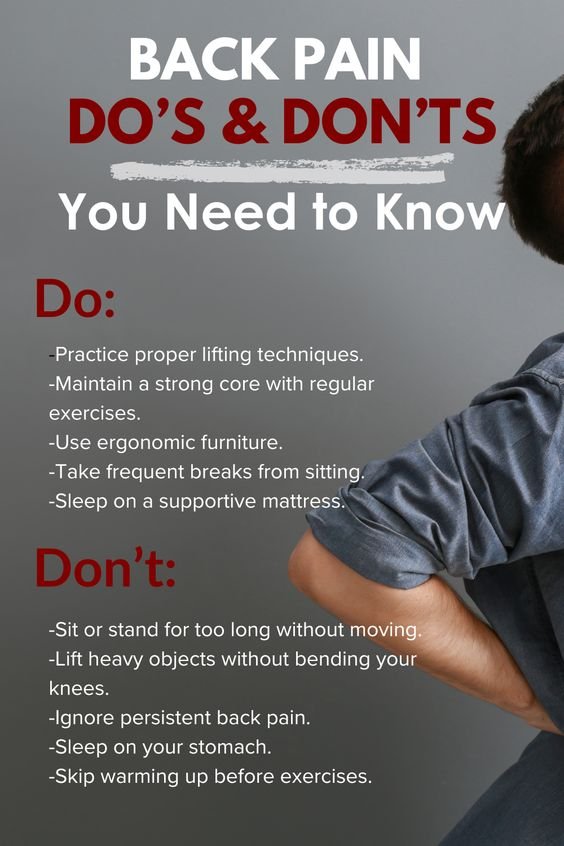
2. DO Maintain a Strong Core With Regular Exercises
A strong core acts like natural armor for your spine. When the muscles around your abdomen, hips, and lower back are weak, your spine absorbs more stress than it should.
Add simple core-friendly exercises such as:
-
Bridges
-
Planks
-
Pelvic tilts
-
Bird-dog exercises
Just a few minutes a day can stabilize your posture and reduce recurring pain.
3. DO Use Ergonomic Furniture
Your home and work environment play a huge role in how your back feels. Ergonomic furniture supports healthy alignment and helps prevent unnecessary tension.
Here’s what to look for:
-
A chair that supports your lower back
-
A desk setup that keeps your screen at eye level
-
A seat height where your feet rest flat on the floor
Small changes can make long sitting hours far more comfortable.
4. DO Take Frequent Breaks From Sitting
Your spine wasn’t designed to stay in one position for hours. Sitting too long tightens your hip flexors, weakens your glutes, and strains your lower back.
Try this simple habit:
-
Stand, stretch, or walk for 1–2 minutes every 30–45 minutes
Even tiny movement breaks go a long way in preventing stiffness and daily pain.
5. DO Sleep on a Supportive Mattress
The right mattress keeps your spine aligned throughout the night. If your bed sags or feels too soft, your back may twist or overextend while you sleep.
Look for:
-
Medium-firm support
-
Proper cushioning for hips and shoulders
-
A pillow that keeps your neck in neutral alignment
Waking up pain-free starts with the right sleeping foundation.
Back Pain DON’Ts (Avoid These Mistakes)
1. DON’T Sit or Stand in One Position Too Long
Staying still — even in a “comfortable” position — increases stiffness and circulation problems. Whether you’re working, cooking, or watching TV, keep your body moving.
A helpful rule:
If it hurts to move, you need movement — if it hurts to stay still, you need movement too.
2. DON’T Lift Heavy Objects Without Bending Your Knees
One common mistake is bending forward from your waist to pick something up. This puts enormous pressure on your discs and lower spine.
Make it a habit to:
-
Squat down
-
Engage your core
-
Keep your back straight
-
Lift with control
Your spine will thank you later.
3. DON’T Ignore Persistent Back Pain
Pain that doesn’t go away shouldn’t be brushed off. Persistent back pain can point to muscular imbalances, inflammation, nerve irritation, or other underlying issues.
Seek professional care if:
-
Pain lasts longer than 2–3 weeks
-
You experience numbness or tingling
-
The pain interferes with daily activities
Early attention prevents small issues from becoming long-term challenges.
4. DON’T Sleep on Your Stomach
Stomach sleeping may feel comfortable, but it forces your spine into an unnatural curve and strains your neck.
Better options include:
-
Side sleeping with a pillow between your knees
-
Back sleeping with a pillow under your knees for support
A neutral spine position at night improves recovery and reduces morning stiffness.
5. DON’T Skip Warming Up Before Exercise
Jumping straight into a workout can shock tight muscles and increase your risk of injury. A proper warm-up prepares your body for movement.
Try:
-
Light stretching
-
Gentle hip mobility exercises
-
A few minutes of walking
Warming up doesn’t need to be long — it just needs to happen.
Final Thoughts
Back pain often comes from everyday habits, and the right do’s and don’ts can make a real difference. By practicing proper lifting techniques, strengthening your core, using ergonomic furniture, and avoiding harmful positions, you create a spine-friendly lifestyle that reduces discomfort and supports long-term mobility.
Start with one or two tips from this list and build from there. Small changes add up — and your back will feel the difference. Save this guide for later and use it anytime your back needs a little extra care.